Being able to forage Wild Carrot is a special treat for those looking to enjoy a familiar tasting food. However, being able to safely identify it is very important and for good reason.
Wild Carrot (Daucus carota) is in the Parsley (Apiaceae) family which includes a huge variety of similar looking species. You are likely familiar with such edible members as Dill, Fennel, Celery, Coriander, and Parsnips. Other relatives, however, include Poison Hemlock (Conium maculatum) and Water Hemlock (Cicuta Spp.) both of which may be fatal if consumed! Of the two, Poison Hemlock and Wild Carrot are most likely to be confused. For that reason, I’ve put together this guide to help you distinguish the difference with certainty.
🥕
The Apiaceae Family
Apiaceae is a vast plant family most commonly recognized for its umbrella‑shaped flower clusters, lacy, feather‑like leaves, large taproots, and aromatic oils. Taking the step to learn these traits as family hallmarks equips enthusiasts with the ability to identify its many genera.
–The Inflorescence
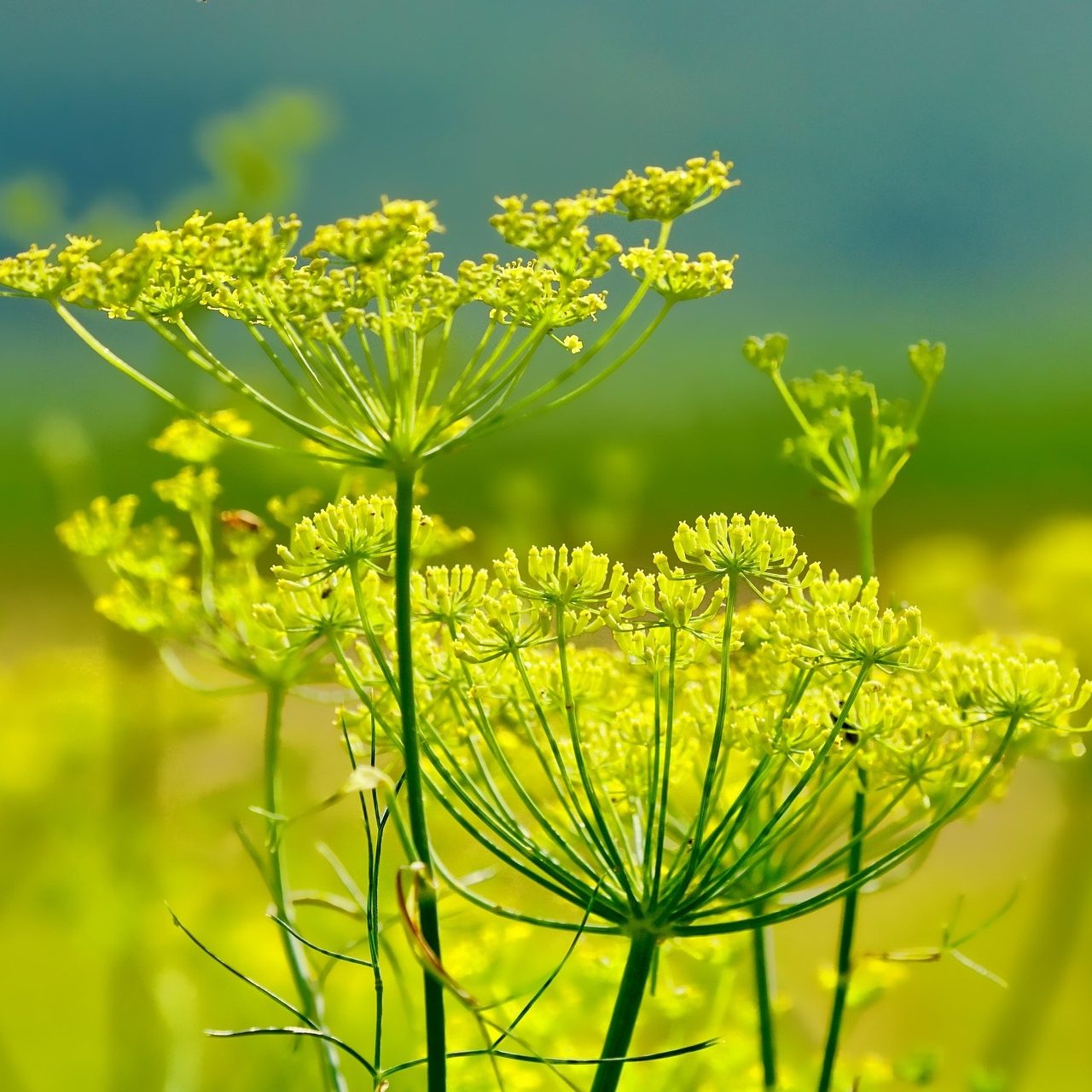
An inflorescence can simply be defined as a flower cluster; a group of flowers attached to a shared stem. The Apiaceae family is descriptively called the Umbellifers because these plants bear an umbrella shaped inflorescence, called umbels. A closer inspection reveals that an umbel is actually made up of many little flowers (florets) rather than being a single large one. Think of it as a nature-made bouquet.
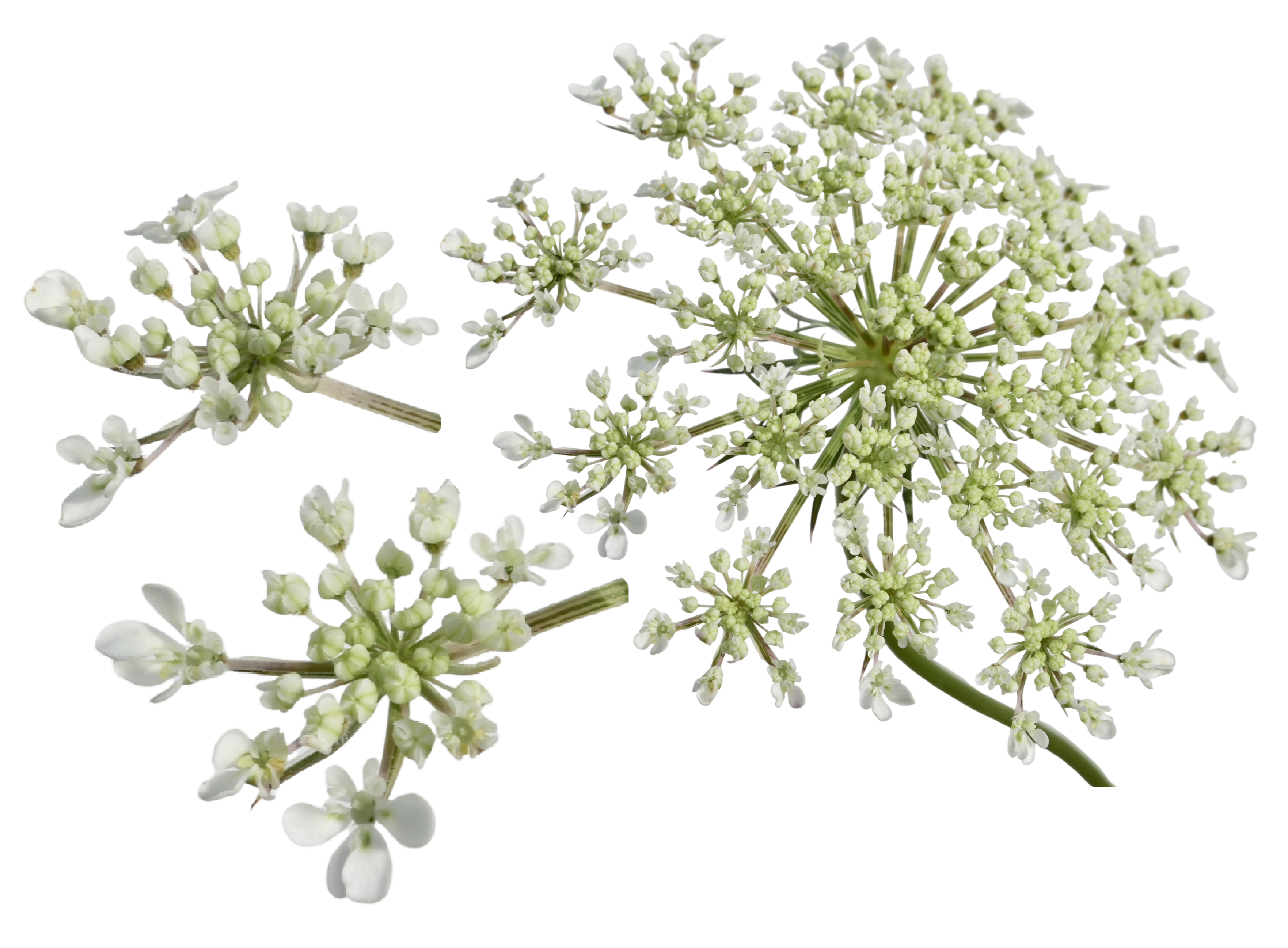
Borne off the main stem radiates many smaller stems (ray) from which an arrangement of flowering stems (umbellule) bears the individual florets. The umbellule looks like a smaller version of the whole umbel. The pedicel is the stem from which the individual florets sit. The above picture illustrates this example taken from a developing wild carrot flower.
–The Leaf
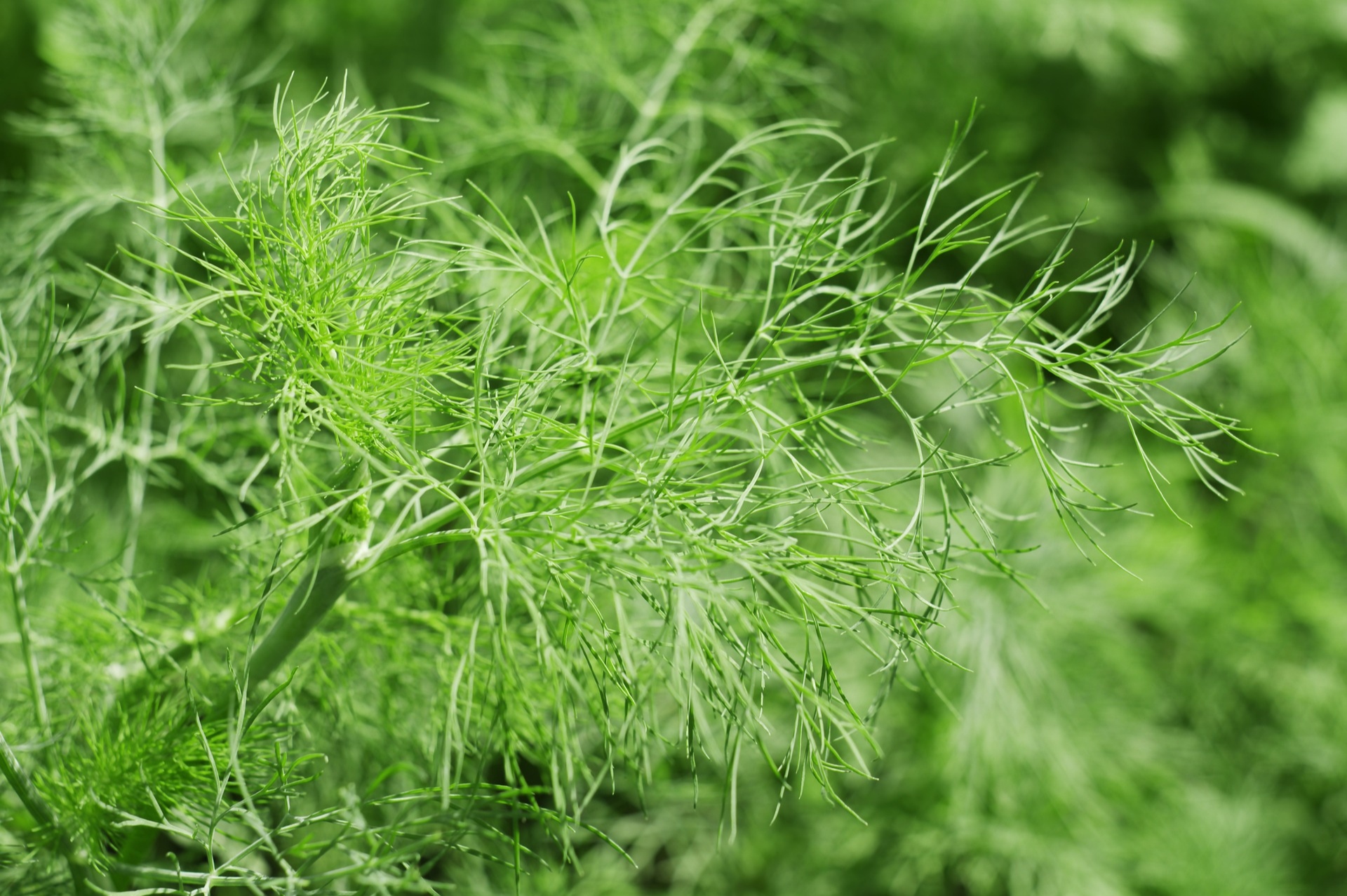
The leaves of Apiaceae are described as lacy, fern-like, or feathery in appearance. Two distinct traits generally define the look of Apiaceae leaves: deeply dissected and compound (divided once) or decompound (divided multiple times).

Wild Carrot, for example, has a feather-like leaf blade that is decompound. From the main leaf stem (petiole) arises a series of large leaf segments (primary pinnae). Each primary pinna is further divided into pinnules, and those pinnules are subdivided again into the finest divisions called ultimate segments. This can be observed in the above picture.
What appears as a stem with multiple leaves is in fact one single leaf. Imagine a broad leaf carved along its main, secondary, and tertiary veins until only a delicate lace of narrow segments remains—one continuous leaf that mimics many.
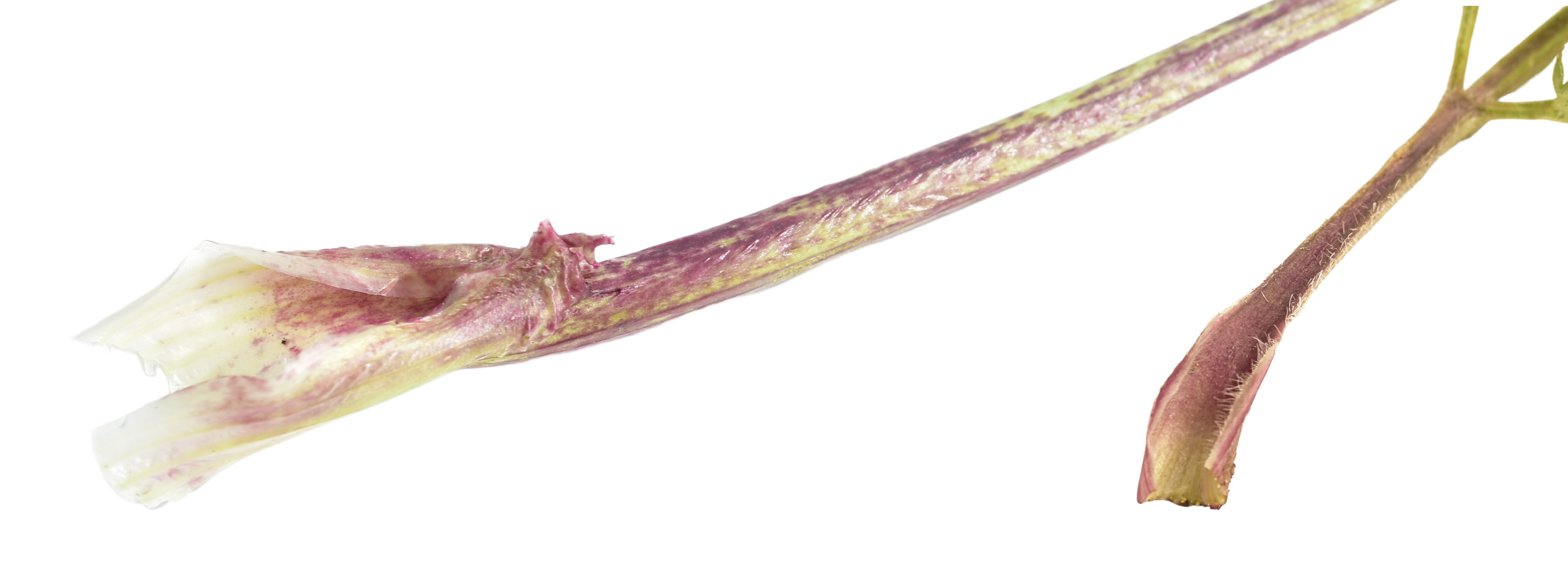
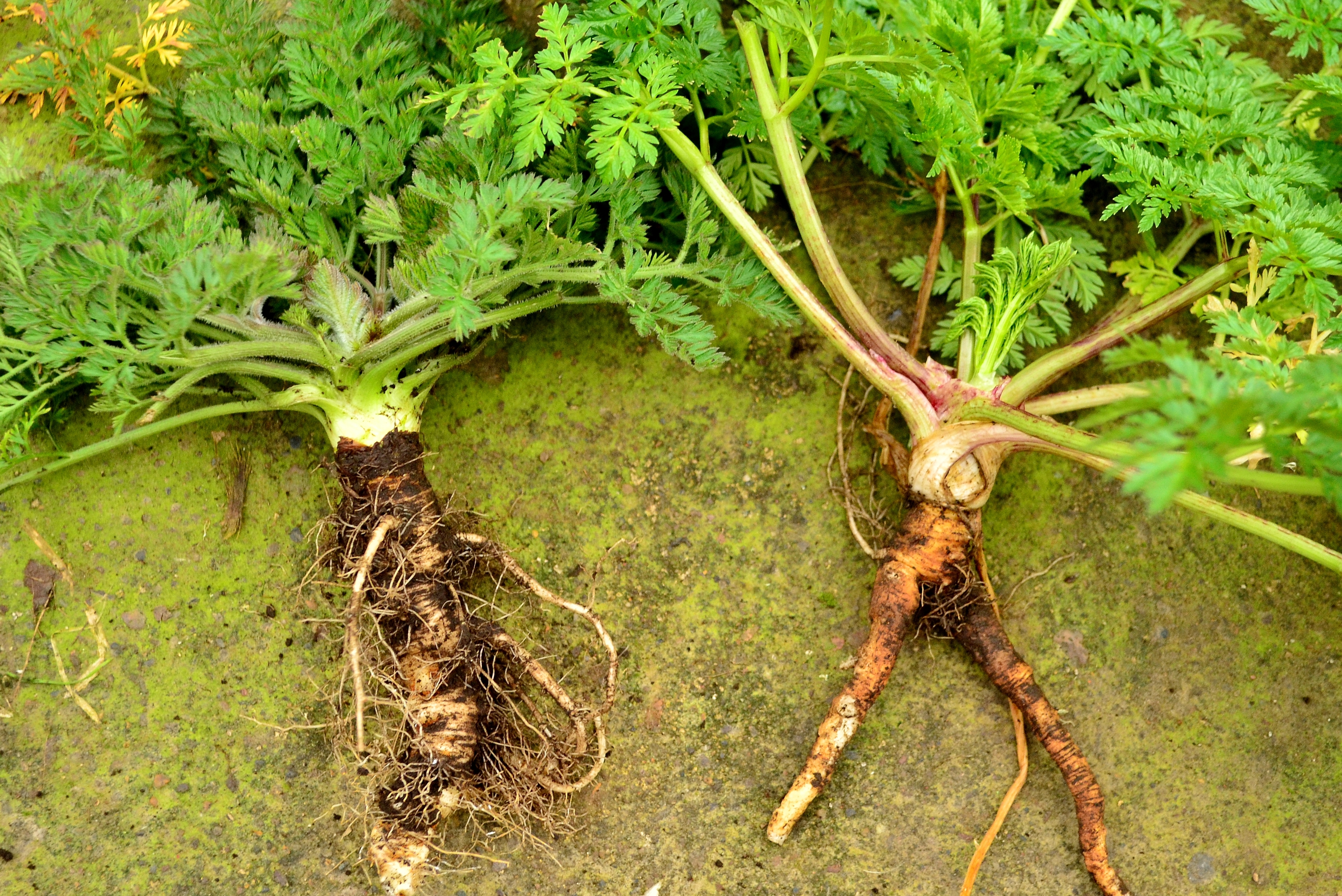
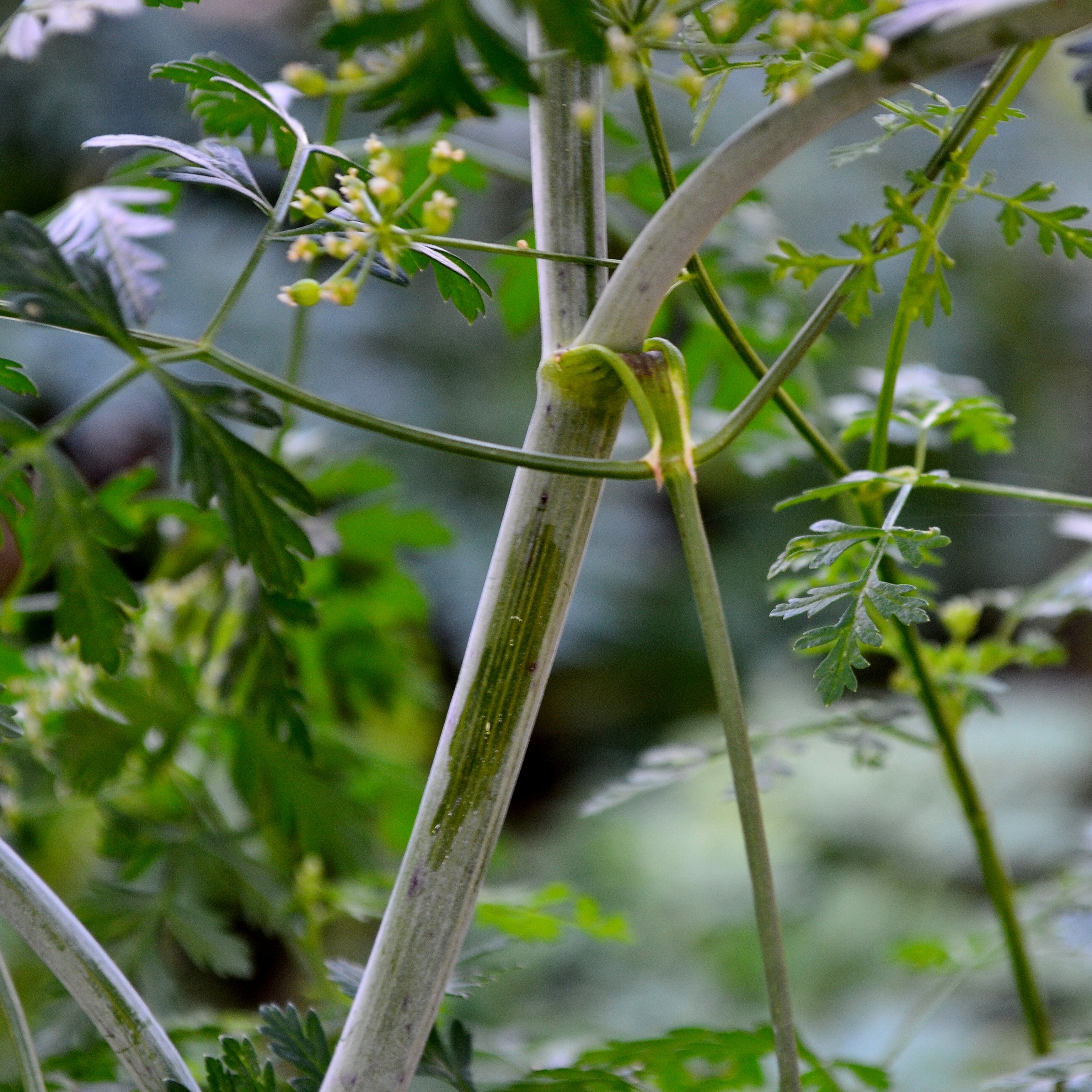
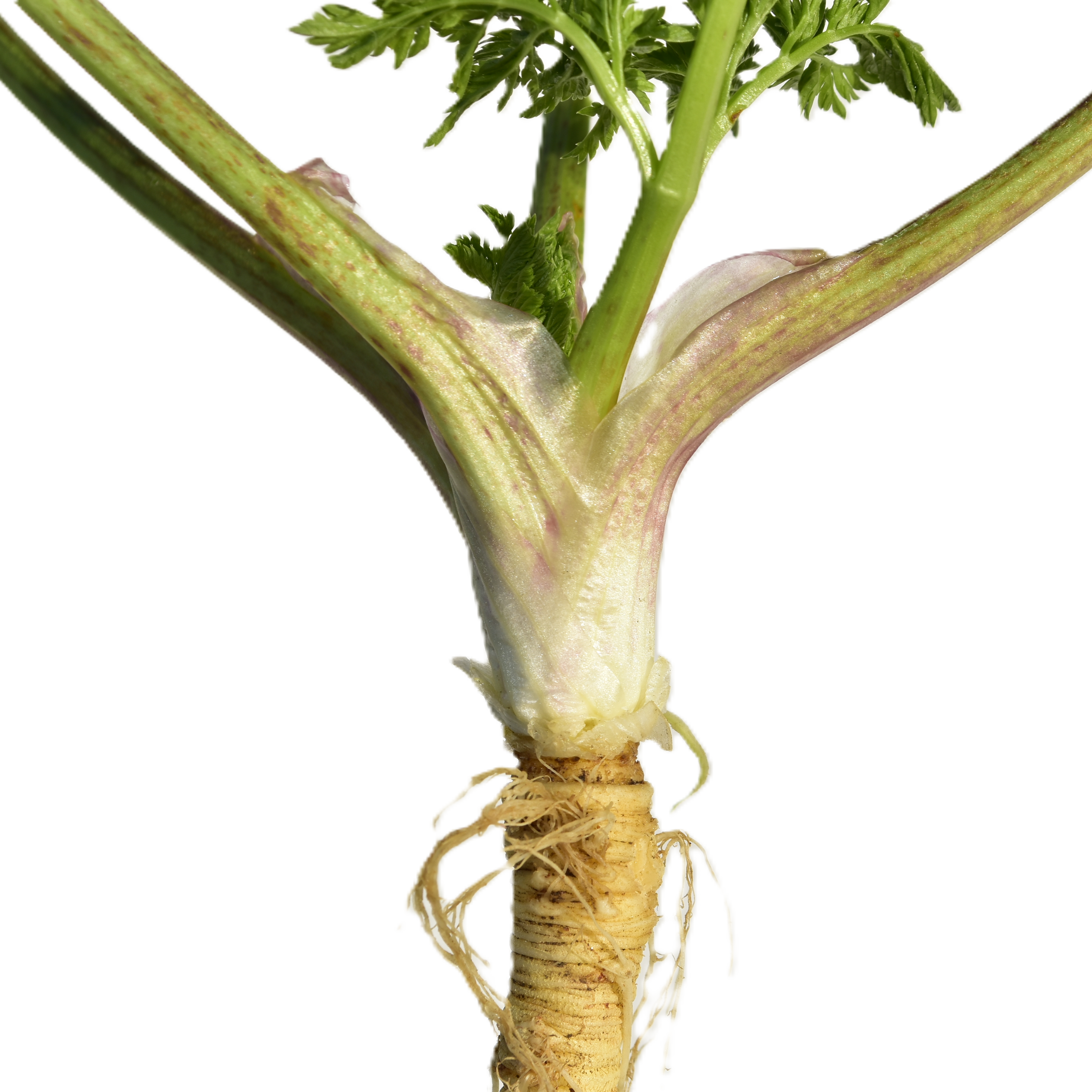
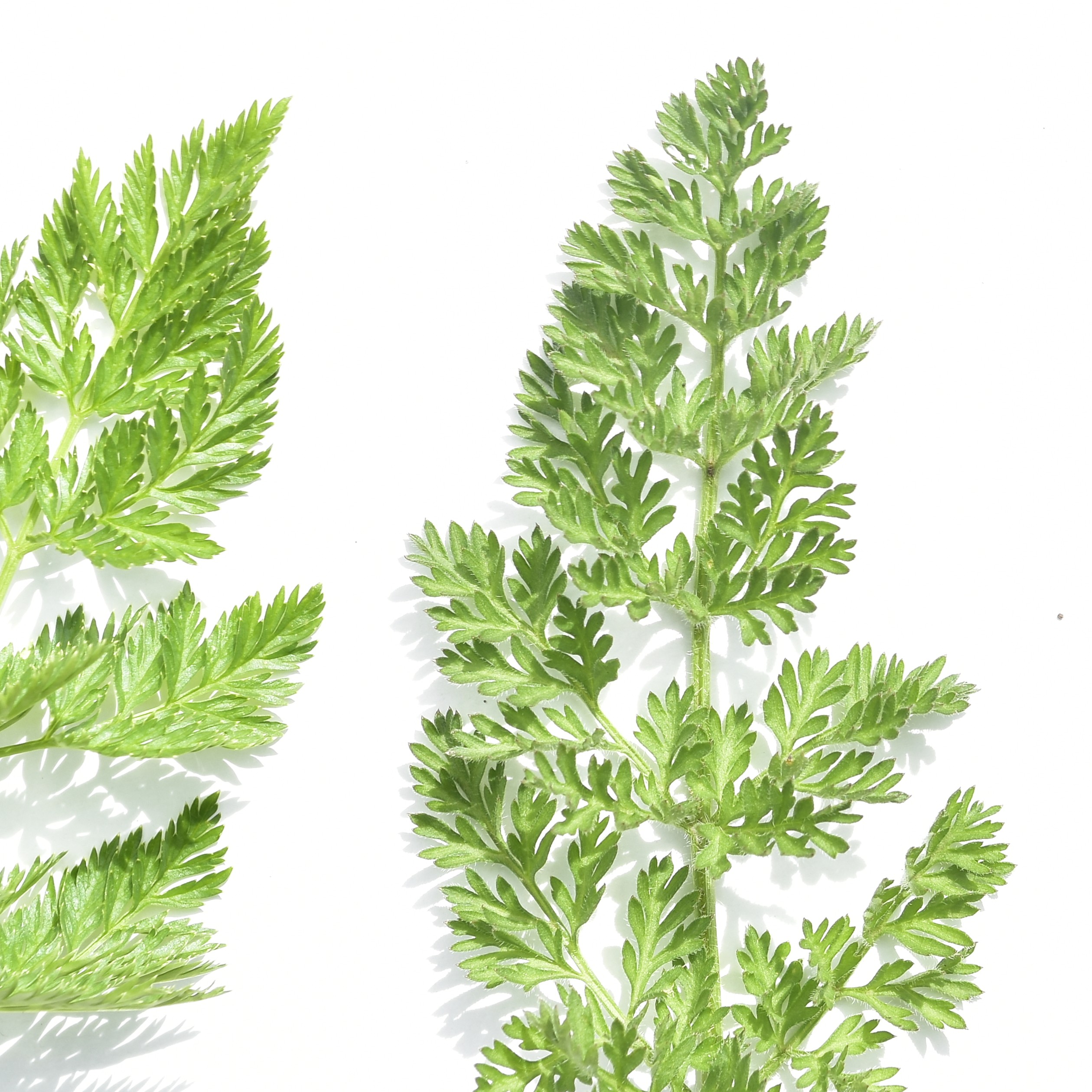
Sheathed petiole: Poison Hemlock (left), Wild Carrot (right) (© 2026 Henry Holly)
Also, take note of the petiole (leaf stem); it has a sheath where it attaches to the plant, wrapping around the stem (see above). In some species, such as Fennel, the sheath is very pronounced while not quite so much in Wild Carrot. Regardless, in every genus of the family, a sheath is always present.
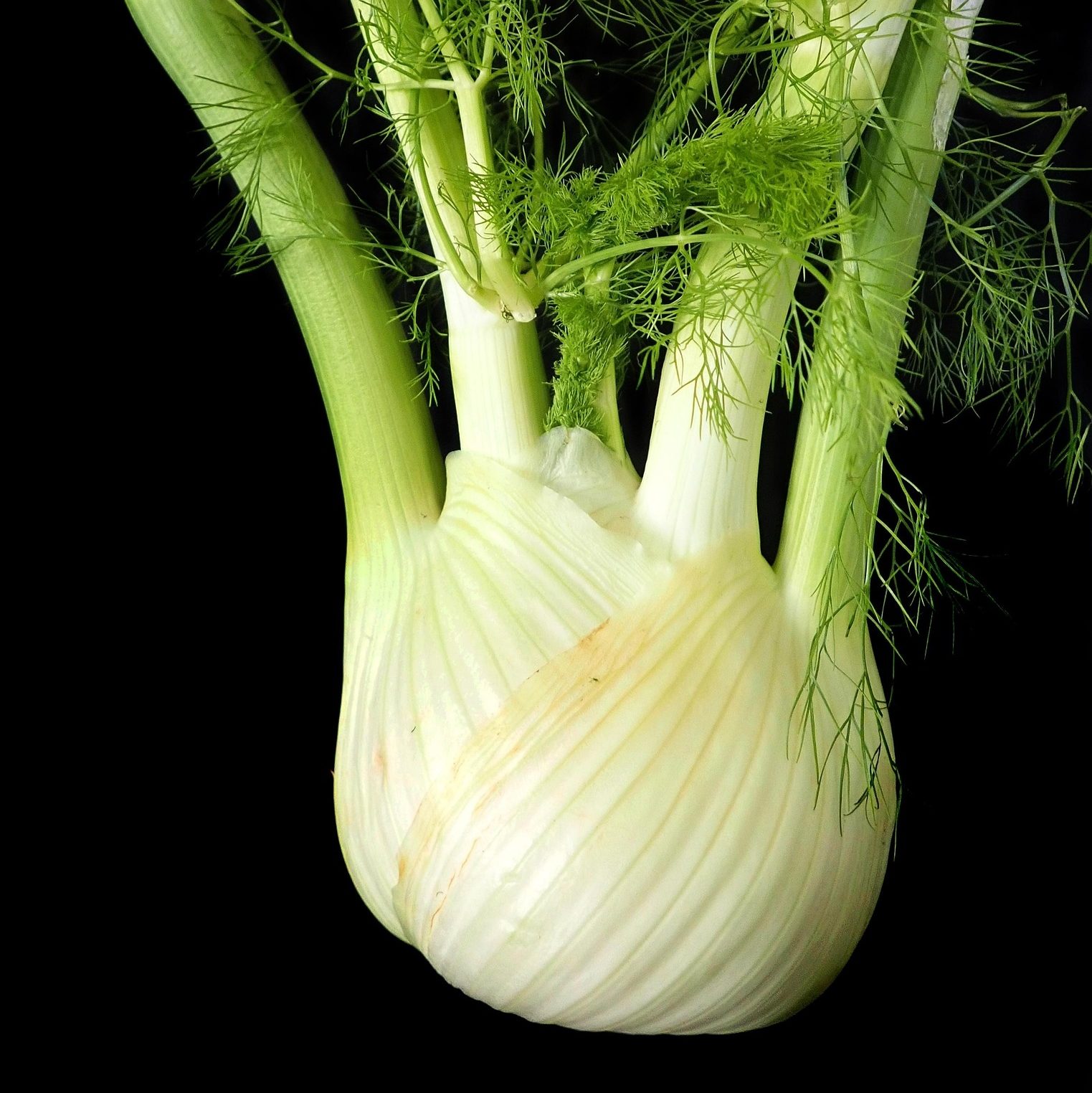

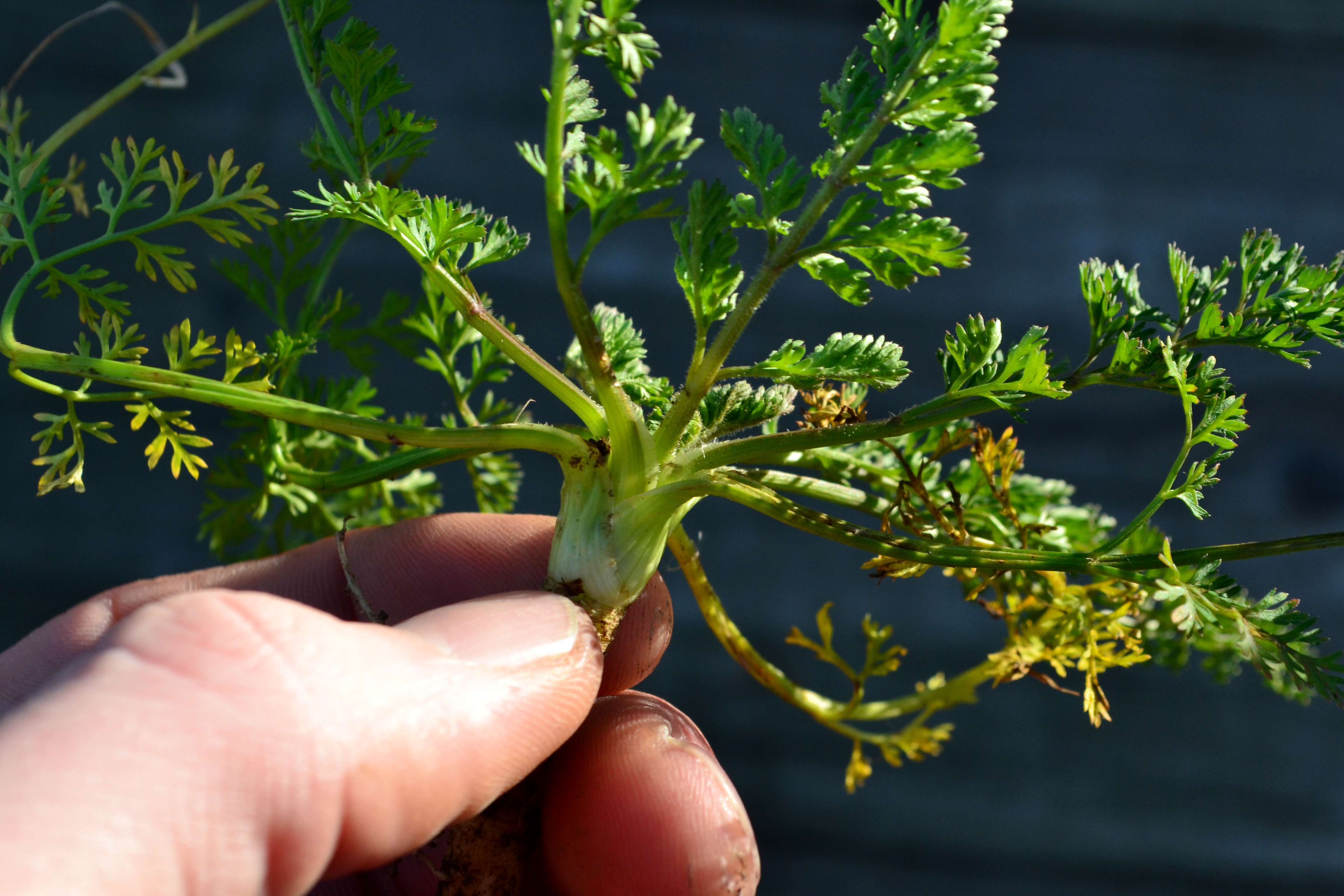
Wild carrot and many other Apiaceae species exhibit alternate leaves. New leaves emerge, spreading outward in a spiral sequence. This pattern is described as a rosette formation. For reference, consider the above picture for top view and the below picture for side view.
–The Root
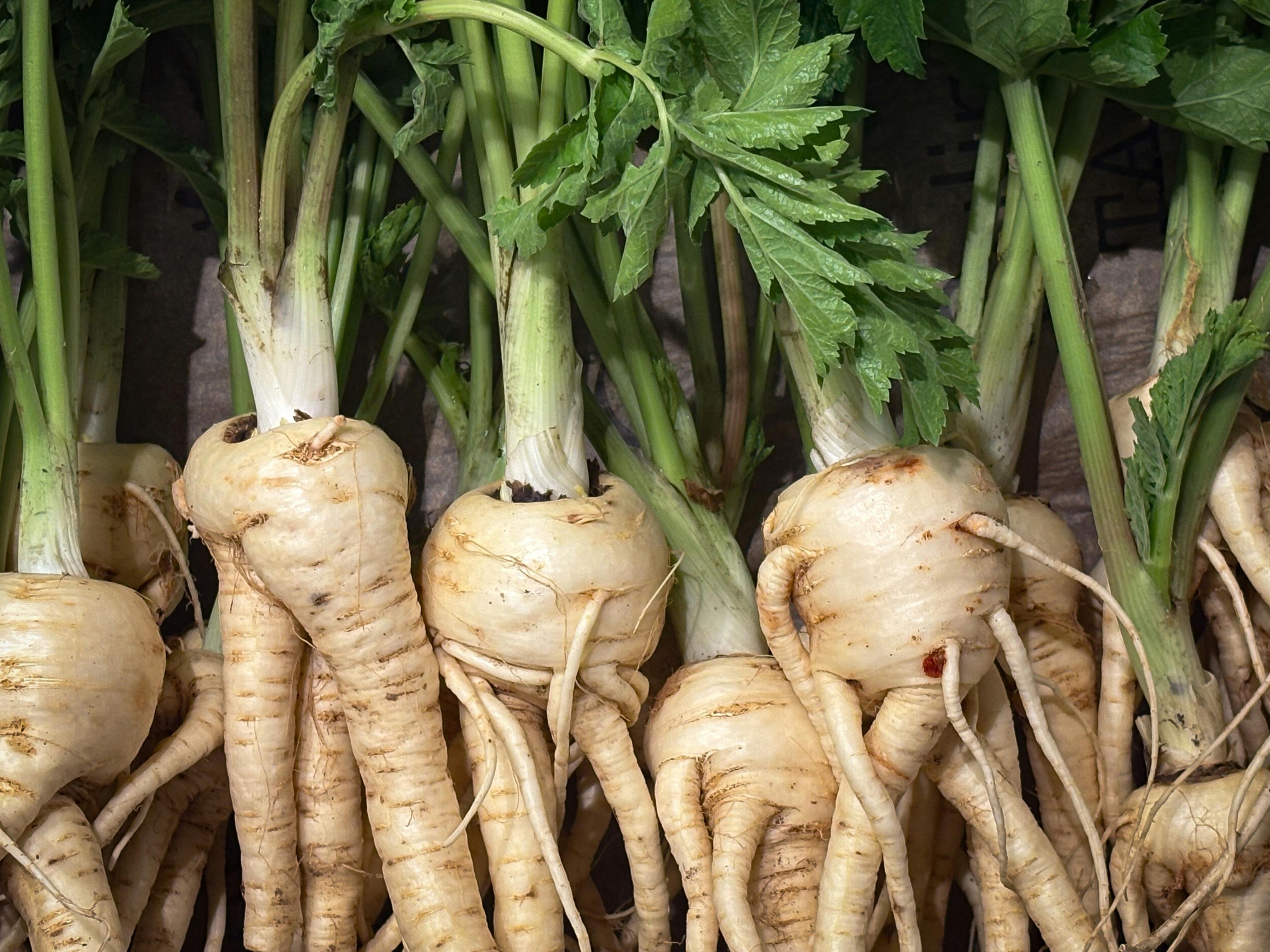
Many plants in the Apiaceae family can be characterized by their storage-based roots, most commonly in the form of a taproot. There are a few exceptions and just two examples include: Yampah (Perideridia spp.) that has storage tubers, or Coriander (Coriandrum spp.) which has shallow, fibrous roots.
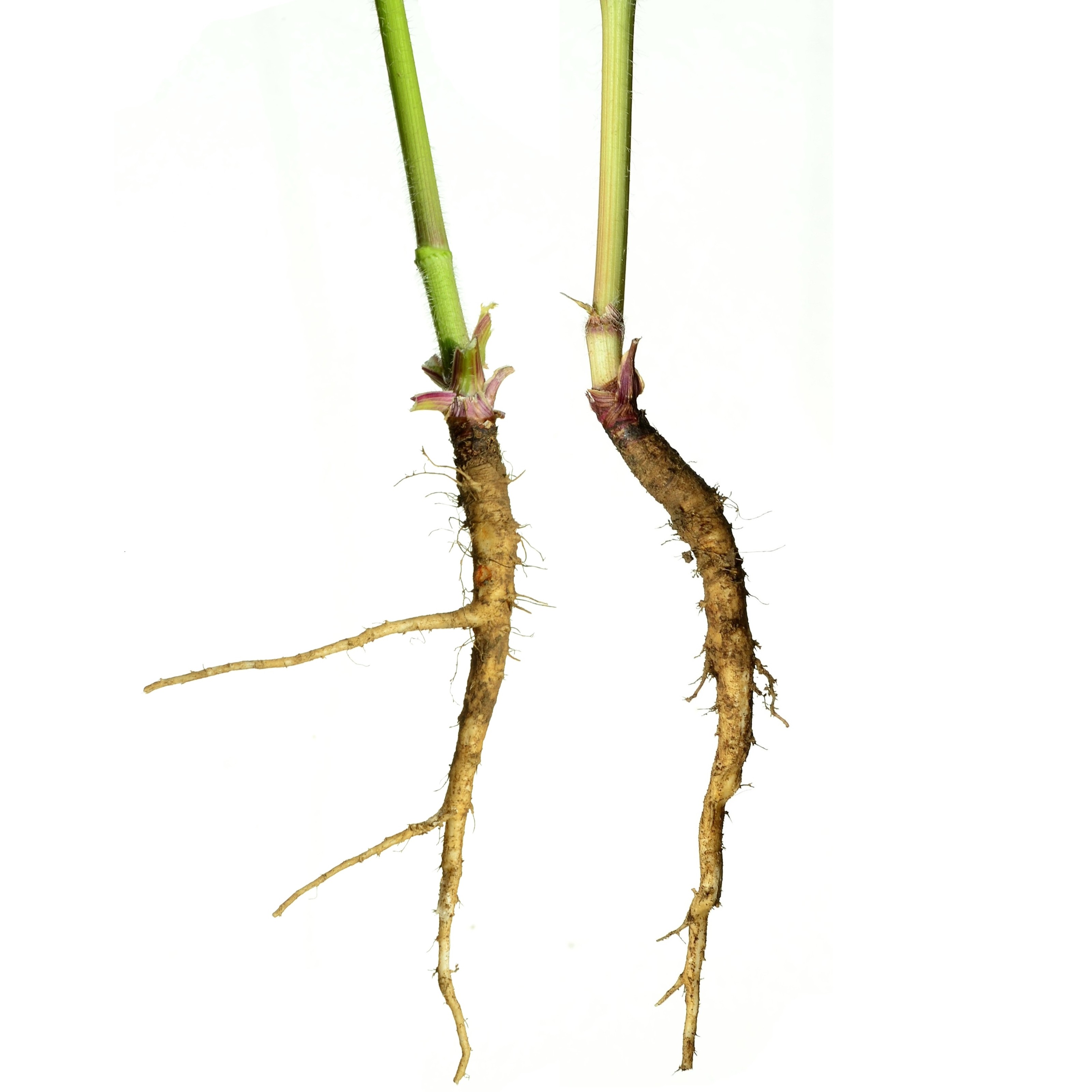
Storage-based roots provide energy during winter months and are typical of biennial (two year) and perennial (many year) plants. The few annuals (one year) in this family, such as Coriander, simply lack the need for storage roots. A few common examples of edible taproots include carrot, parsnip (below) and celeriac.
-The Aroma
A final, yet noteworthy trait amongst Apiaceae is the presence of fragrant essential oils. Many species within this family are quite popular for their herbal aromatics lending to culinary and medicinal uses.
Specialized ducts store essential oils in various parts of each plant, and each genus has its own unique blend of terpenes and phenylpropanoids. Scents can range from sweet, licorice-like (anise, fennel) to minty (caraway, dill) to floral (carrot, coriander) to spicy (cumin). Poison Hemlock is described as having a pungent, musty, or mouse-like scent. Like many of the kitchen herbs we’re so familiar with, once a scent recognition is made, it’s unlikely to be forgotten.
🥕
The Distinguished Similarities
🥕Wild Carrot vs ☠️Poison Hemlock
Ah, yes, the part you’ve been looking for…
In this section we’ll consider the traits which are visually similar between Wild Carrot and Poison Hemlock and then compare what makes them different.
-Summary
Both plants grow as biennials producing a large taproot and a basal rosette of leaves in the first year and developing flowering stalks in the second. Axillary branching emerges from the primary and sequential stems thereafter, each producing white-colored umbels. Leaves are decompound, feathery, and fernlike, arising in an alternate pattern. Both plants are entirely aromatic. Confusion between the two is most likely to occur early in their life cycle when both plants are near similar size.
🥕
-Inflorescence
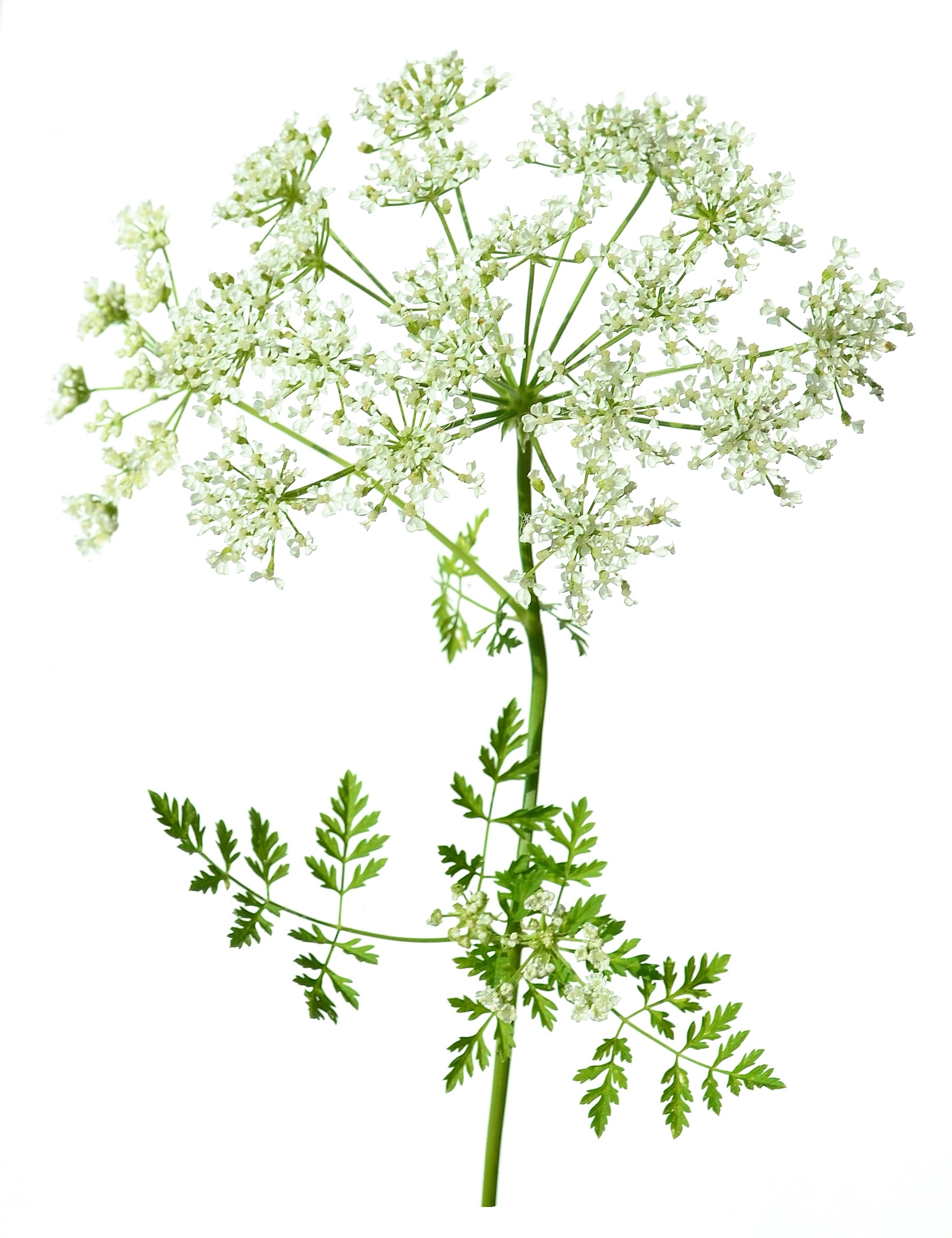
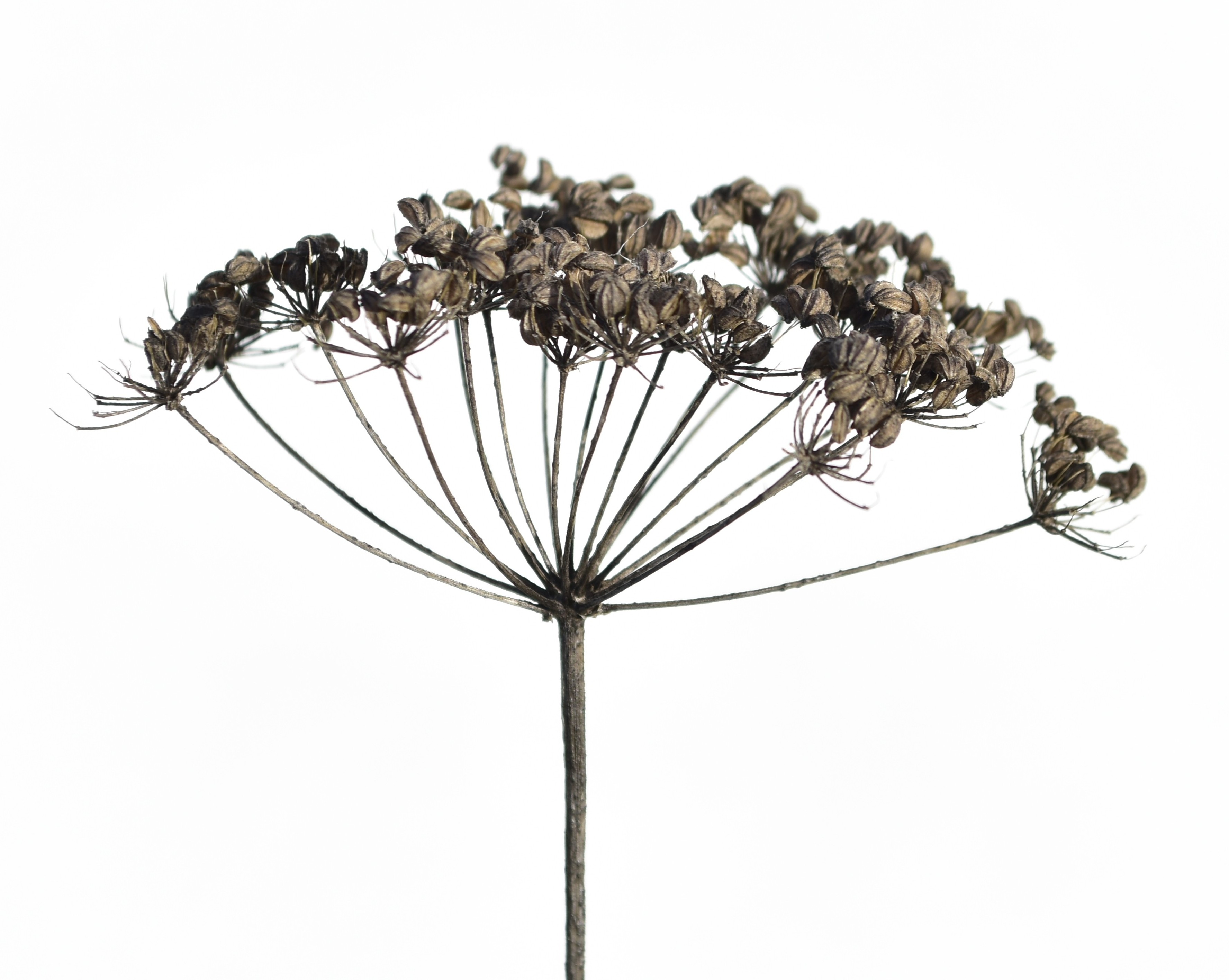
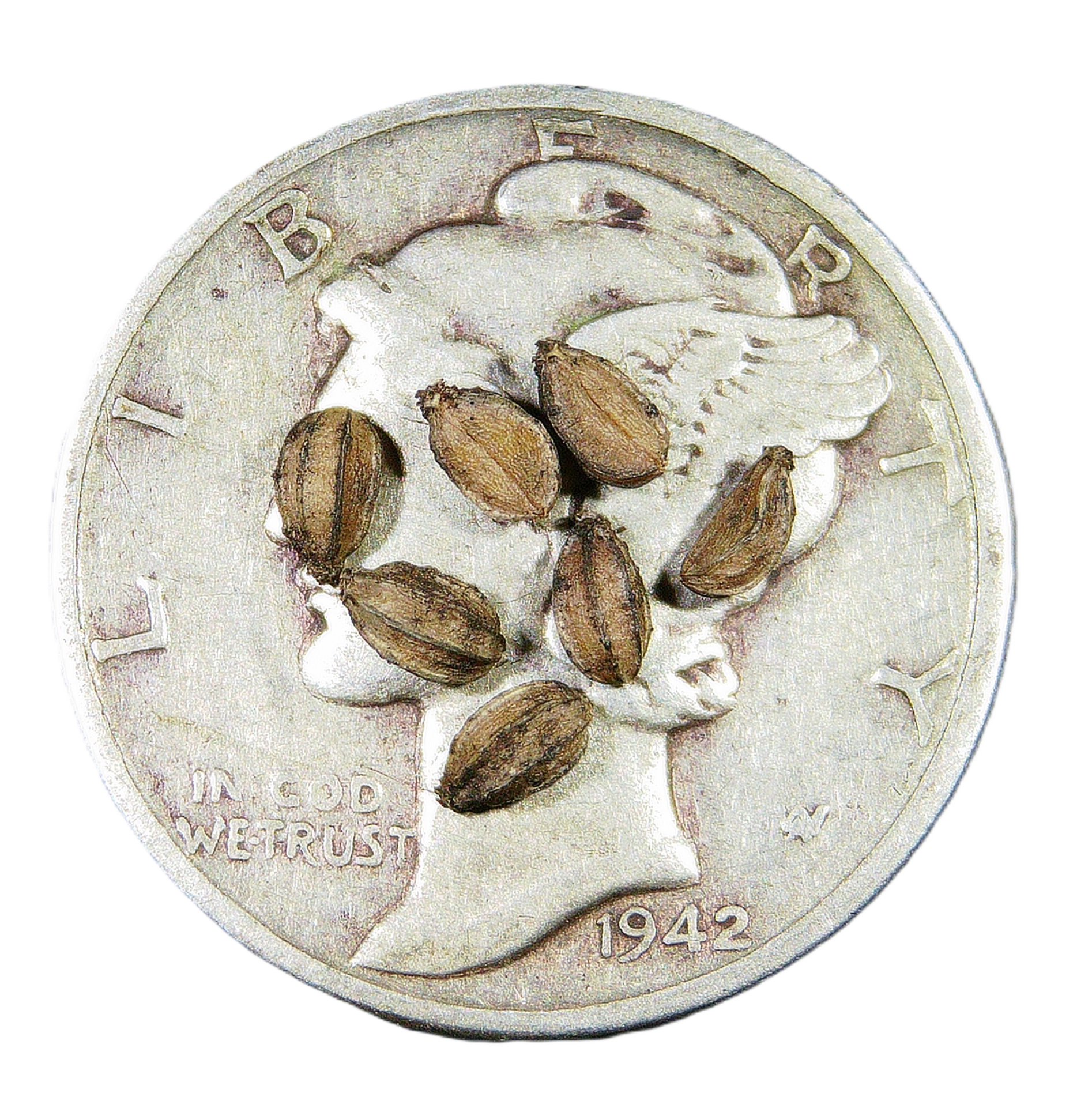
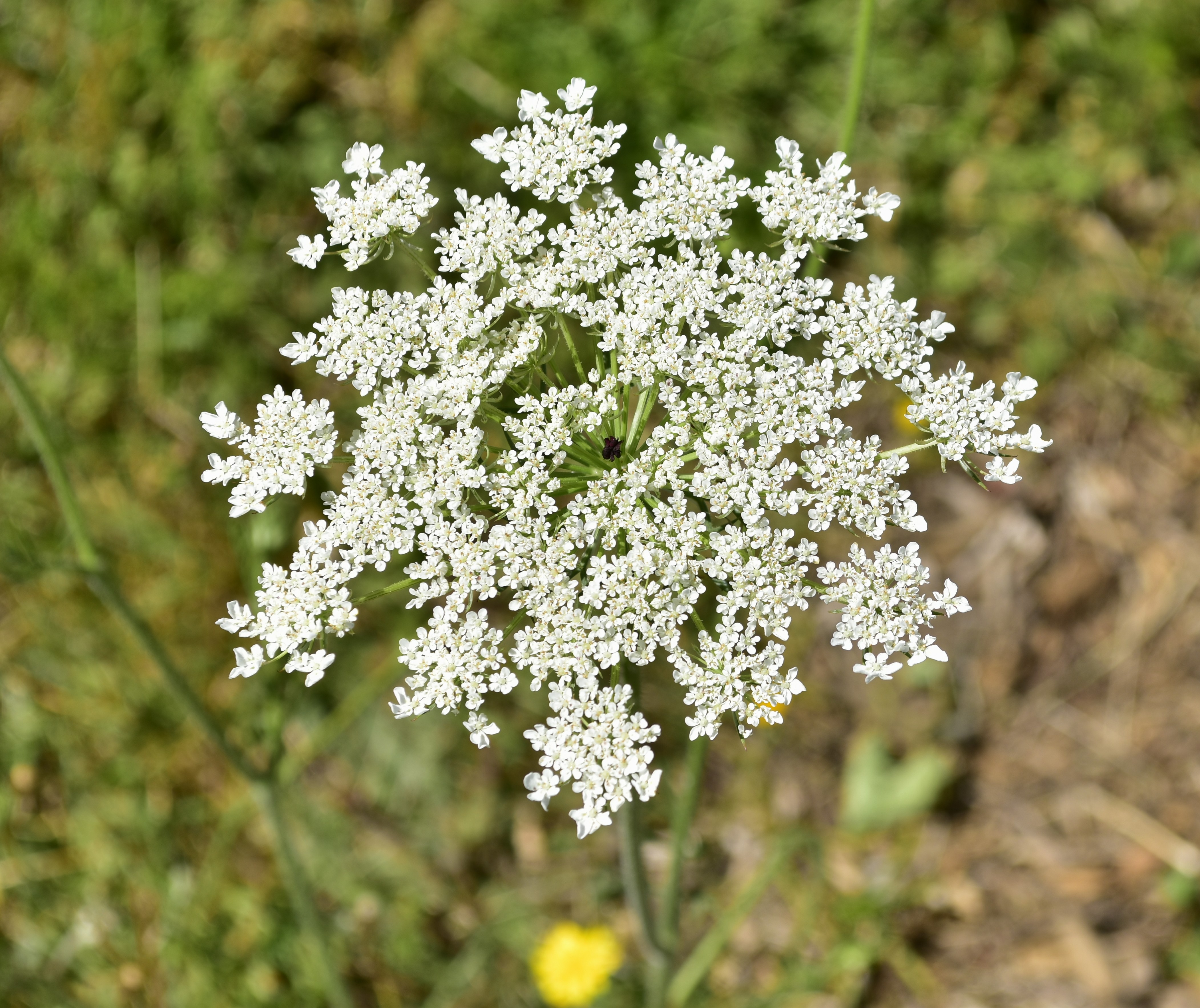
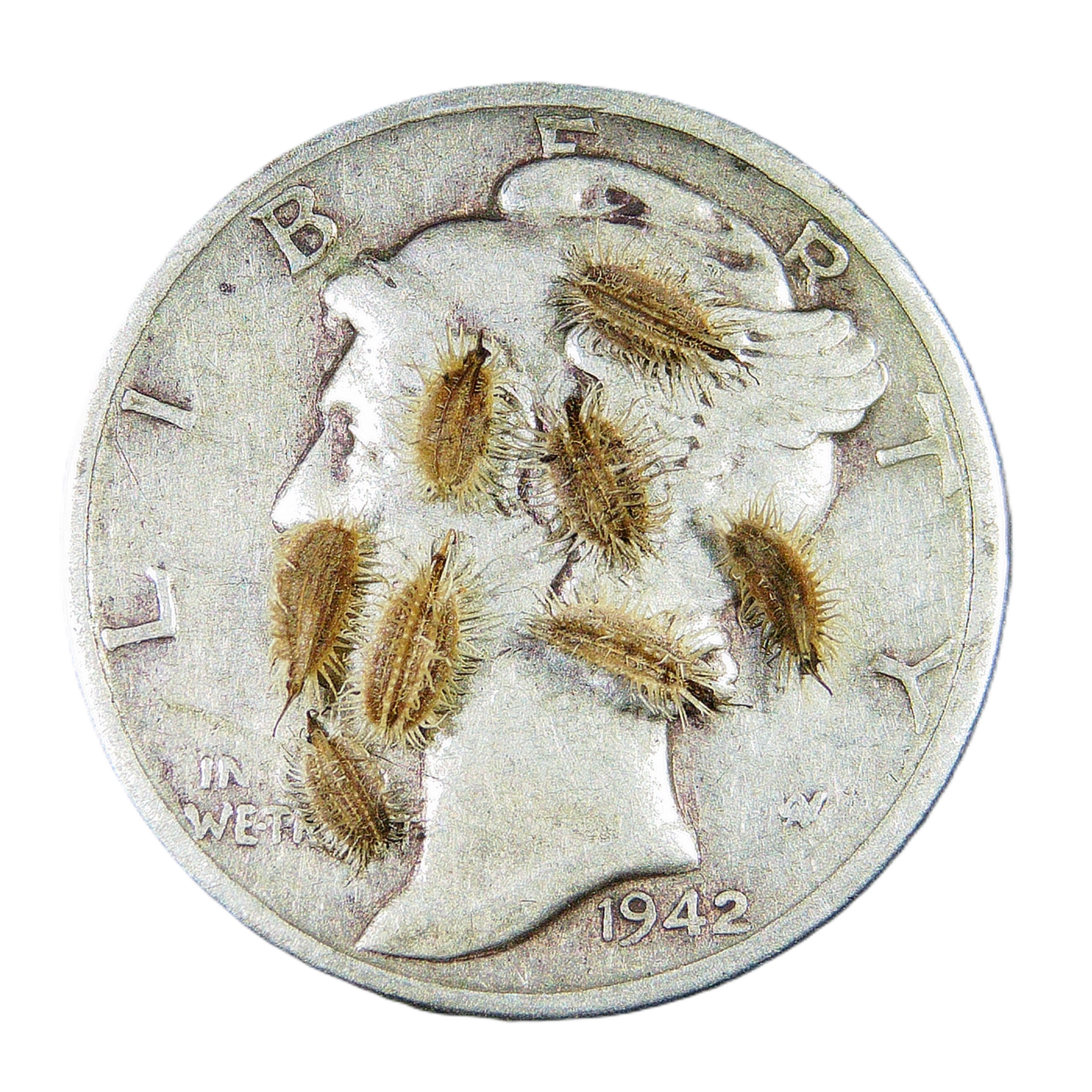
Similarity: An umbel-shaped, white-colored, compound inflorescence producing fruit incapsulated seeds that are brown with vertical ridges.
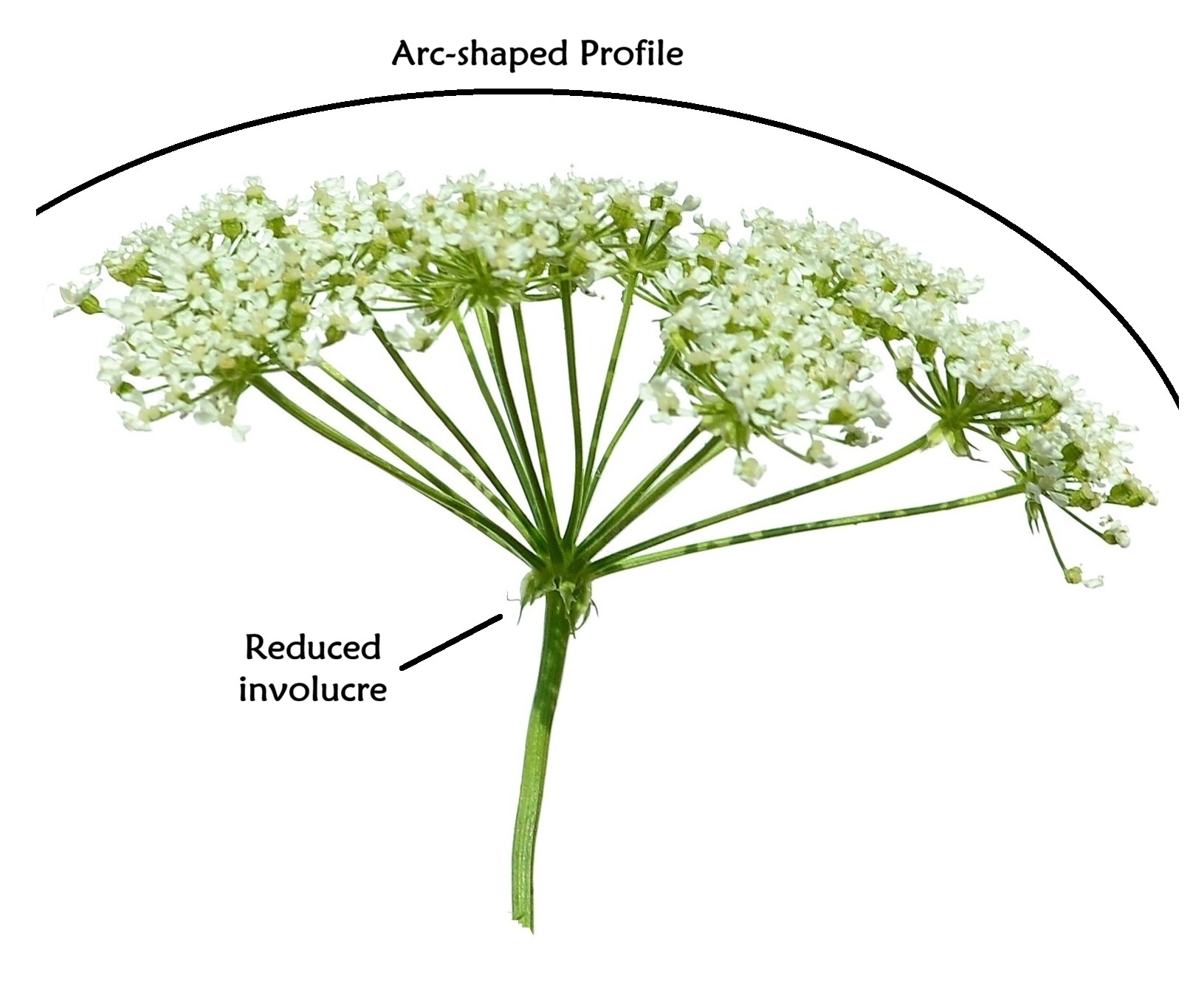
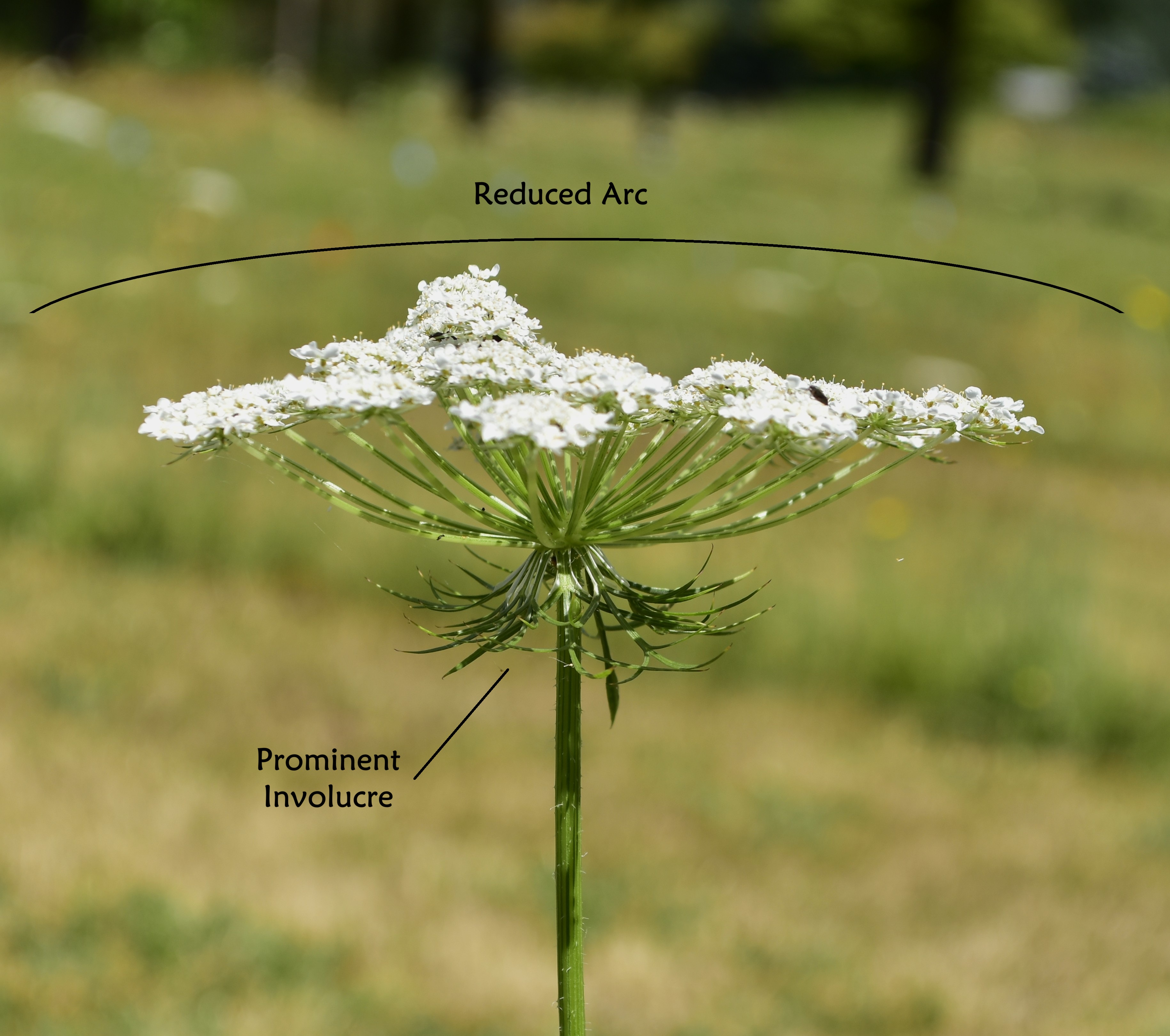
Difference: ☠️ Poison Hemlock has a comparably less compact umbel with an arc-shaped profile, it lacks a single purple floret, and it lacks a distinct involucre. Little transformation happens during fruit production. The dry, seed containing fruit are comparably plumper, and smooth.
🥕
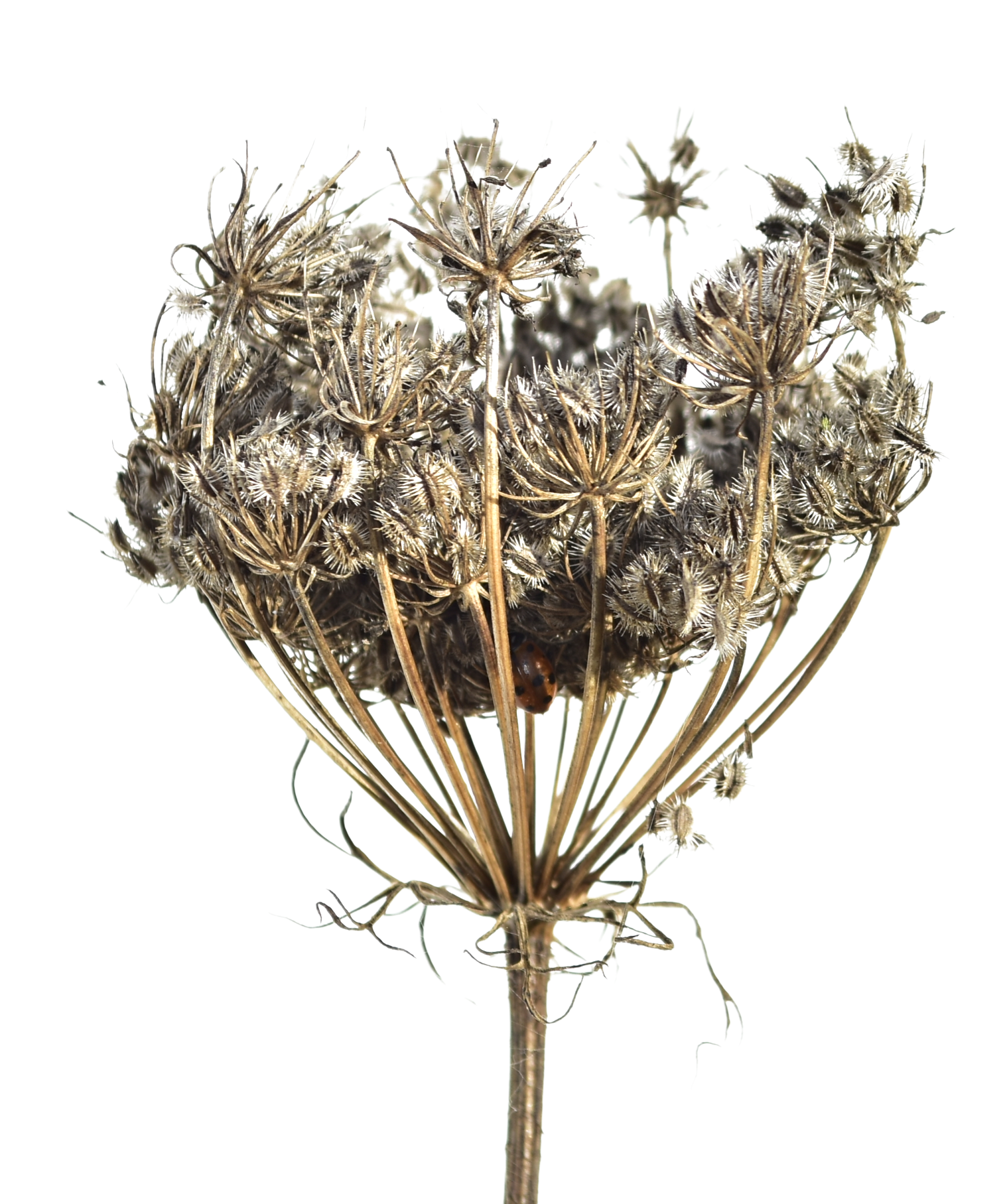
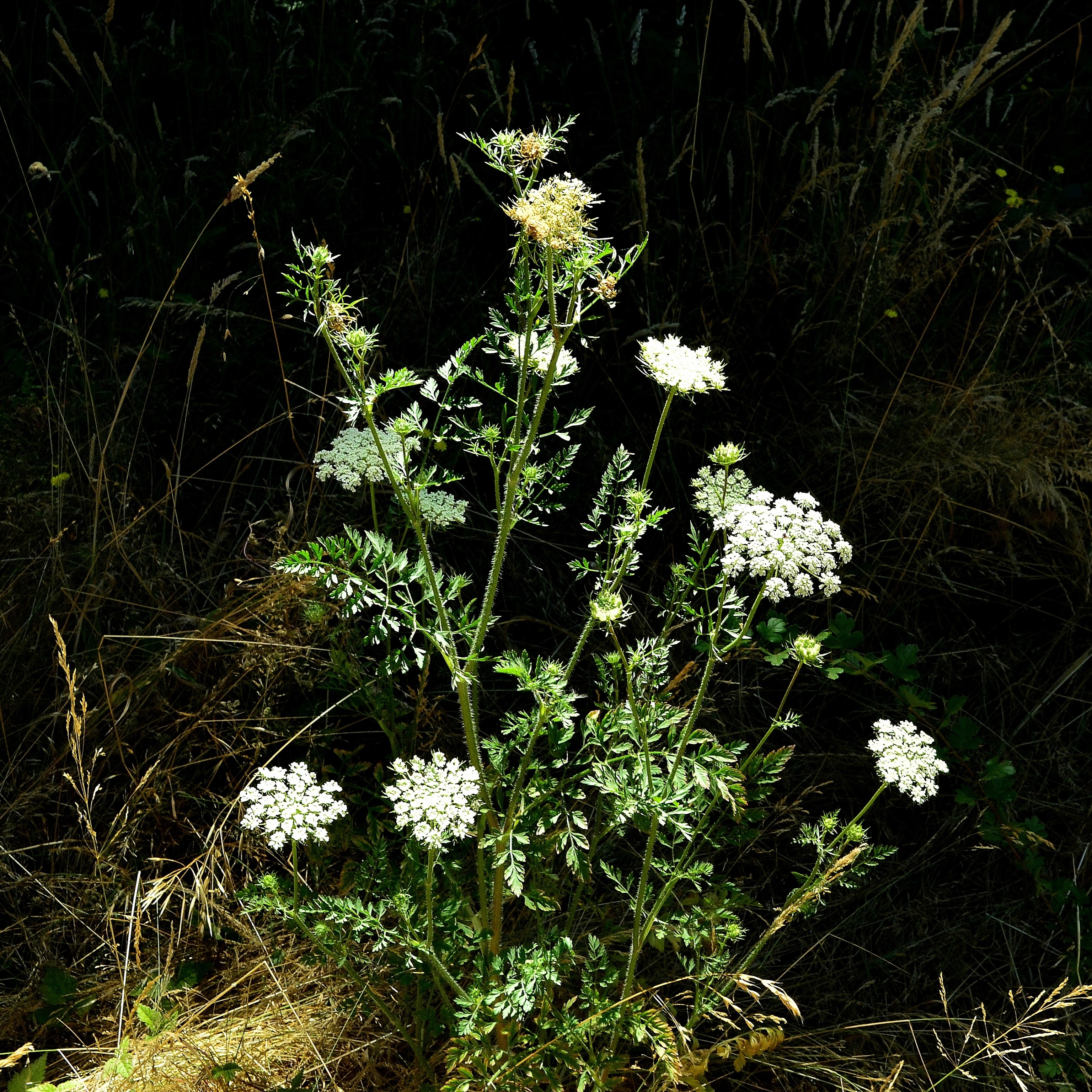
🥕 Wild Carrot has a very compact umbel, its profile is typically flat topped but can also be arced. It has a single purple floret in the center, and it has a prominent involucre. Complete inflorescence transforms into a “bird’s nest” shape during fruit production. Odor is floral and carrot-like. The dry, seed containing fruit are comparably thinner, display more pronounced vertical ridges, and are covered in stiff bristles.
🥕
-Flowering Stem
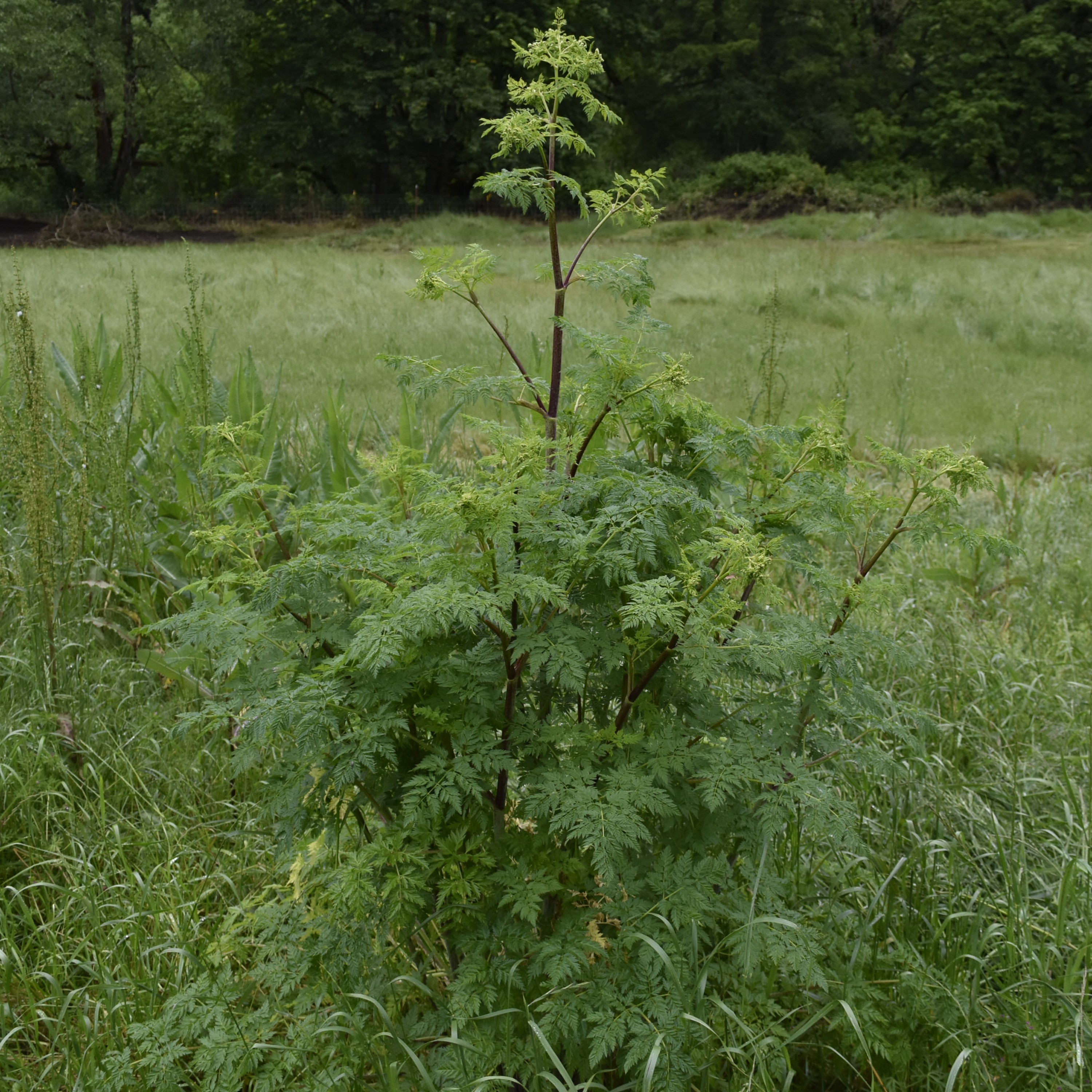
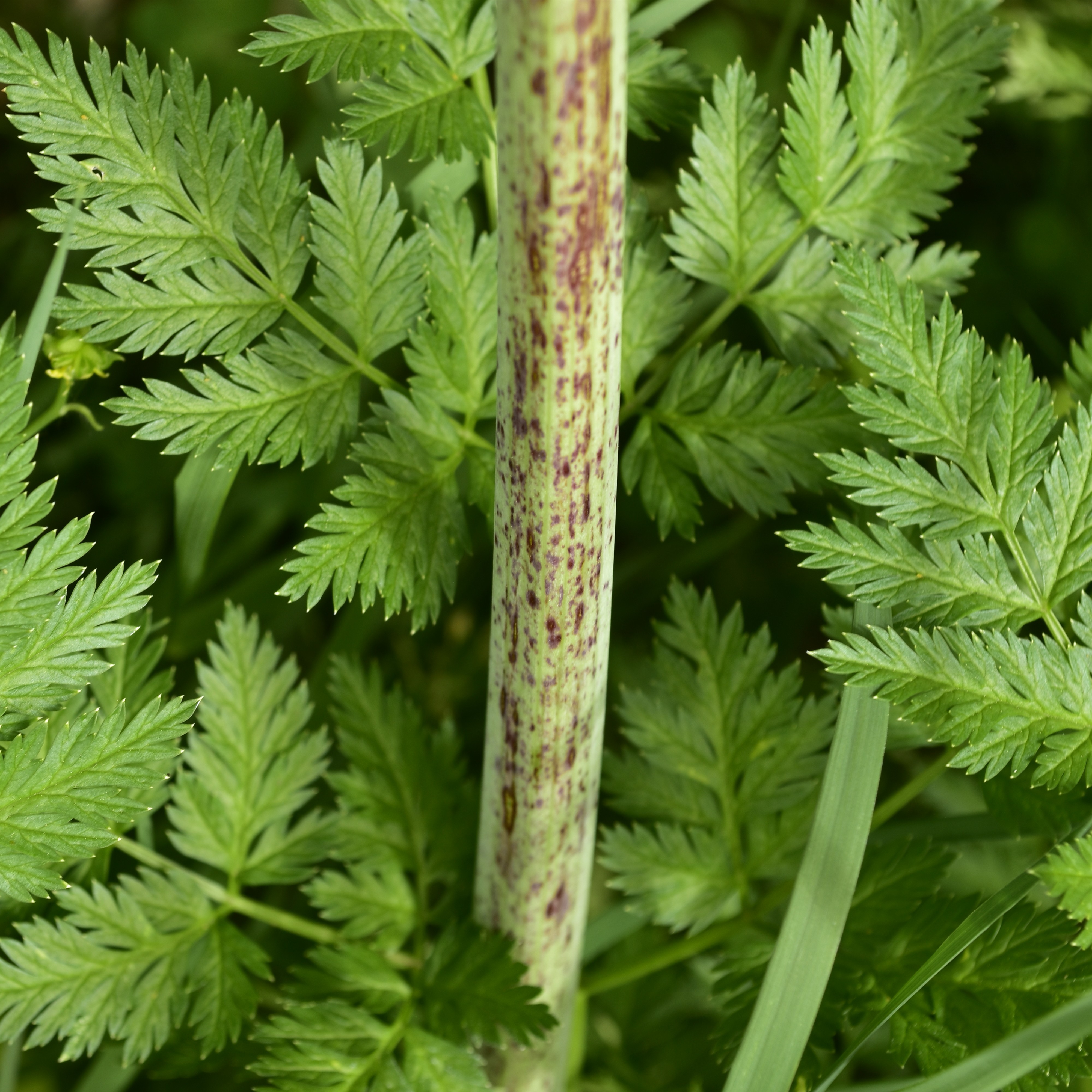
Similarity: Tall flowering stem rises from a leafy rosette, bearing axillary branches with sequential flowering stems.
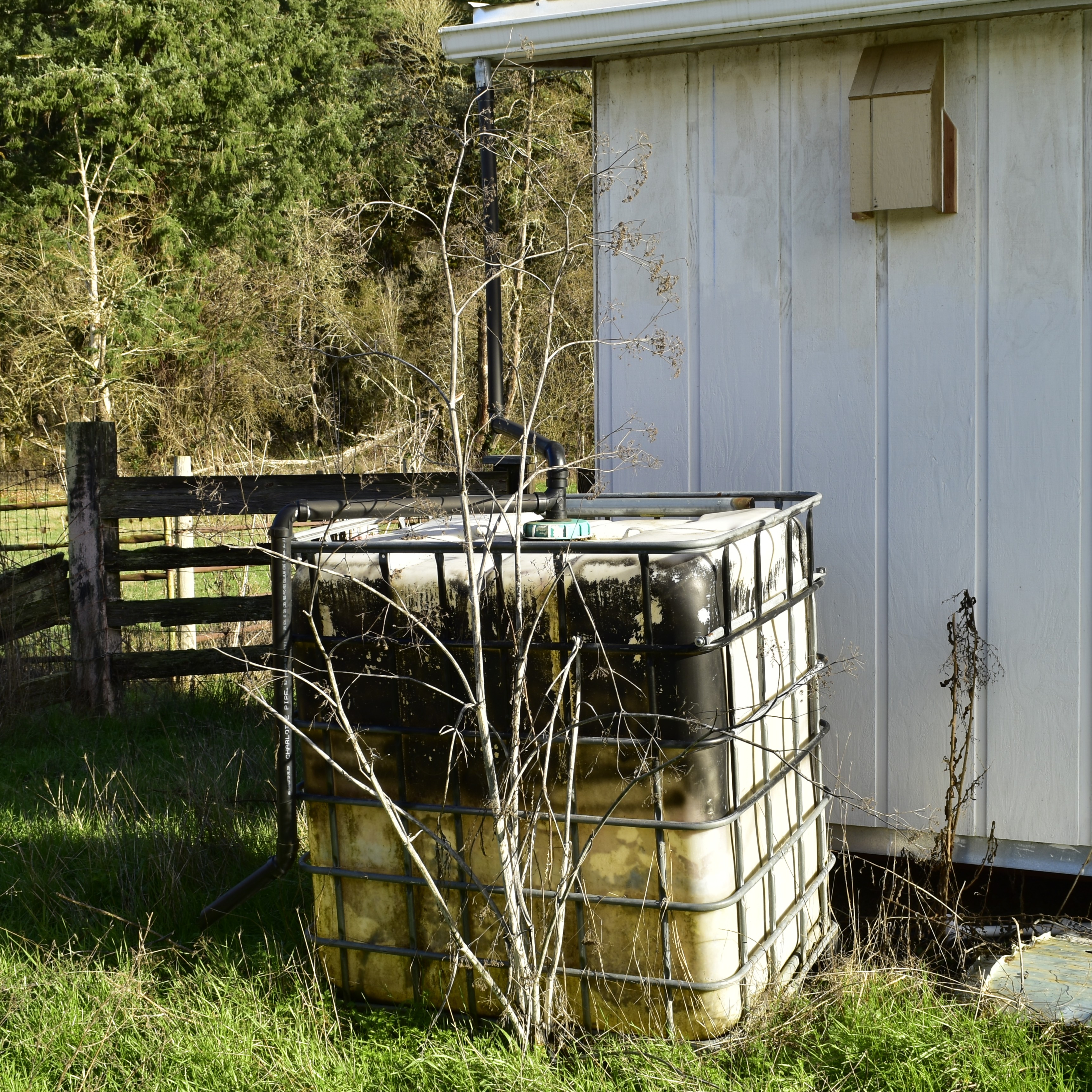
Difference: ☠️ Poison Hemlock grows comparably taller (5-8ft on average but can grow even taller), it has a completely hairless stem, speckled with reddish/purple streaks and blotches, and is often covered in a white, powdery film. Its flowering season completes earlier in the year with the stem detritus/seeds still persisting into winter months. Odor is musty.
🥕
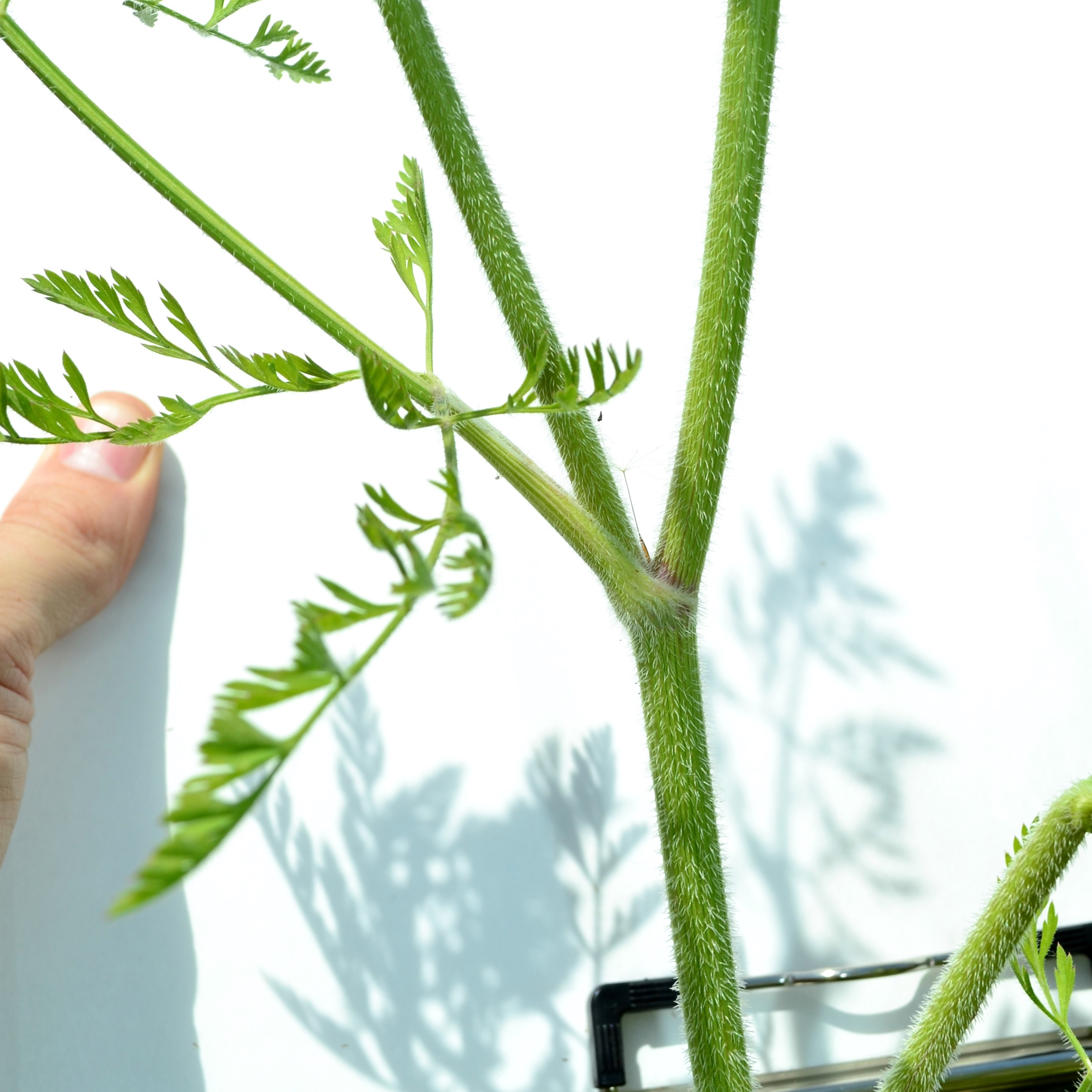
🥕 Wild Carrot grows comparably shorter (2-5ft on average). Its stem is totally covered in fine, fuzz-like hairs and it is solid green in color with no blotches or powdery bloom. If red is present, it will be a gradient tinge, never blotchy. Flowering season slows by end of summer but persists into the late fall months with the stem detritus/seeds maintaining well into the winter months. Odor is herbal and carrot-like.

🥕
-Leaves
Similarity: Decompound, lacy, and fern-like. Perimeter outline is triangular in shape. Petiole is sheathed.
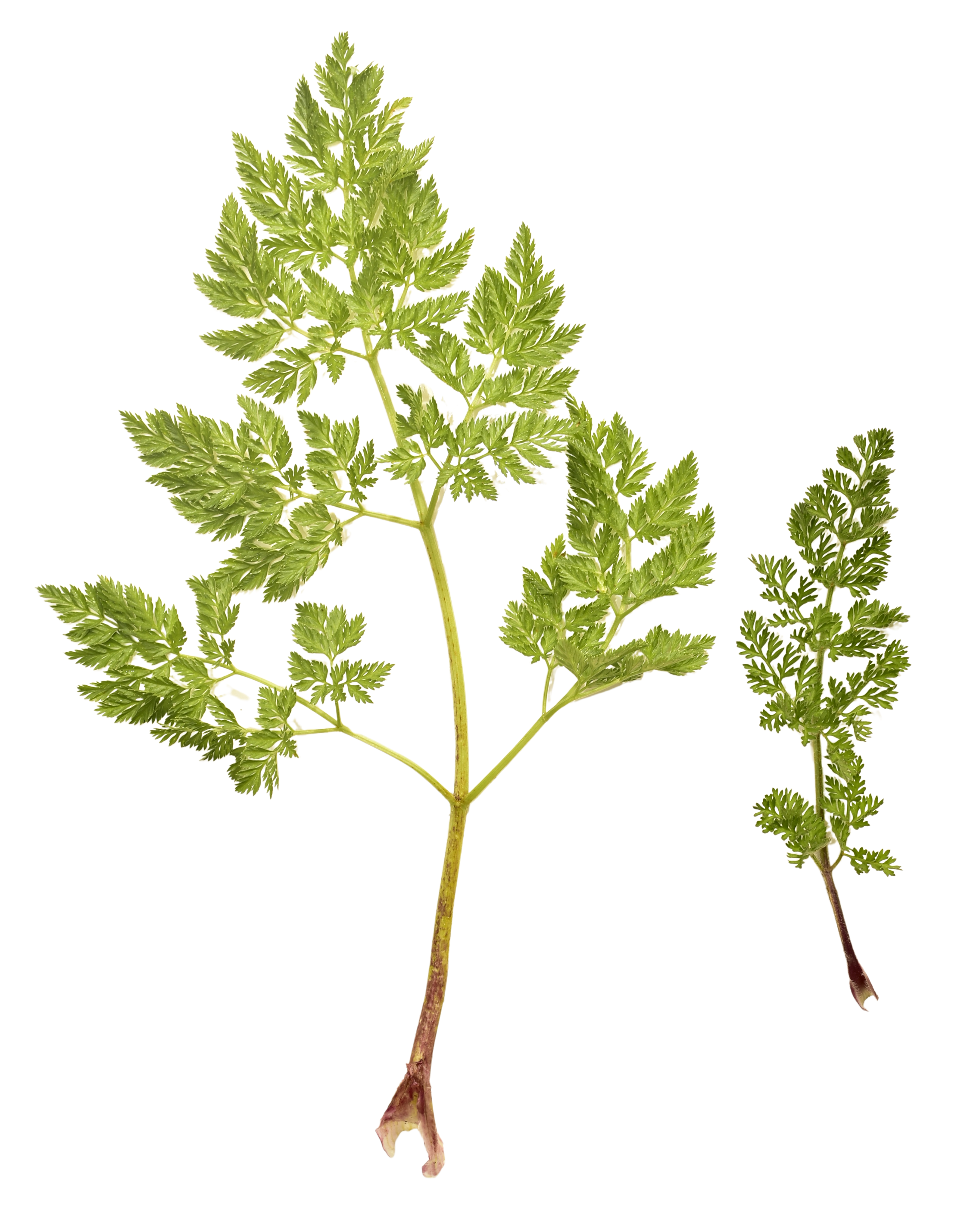
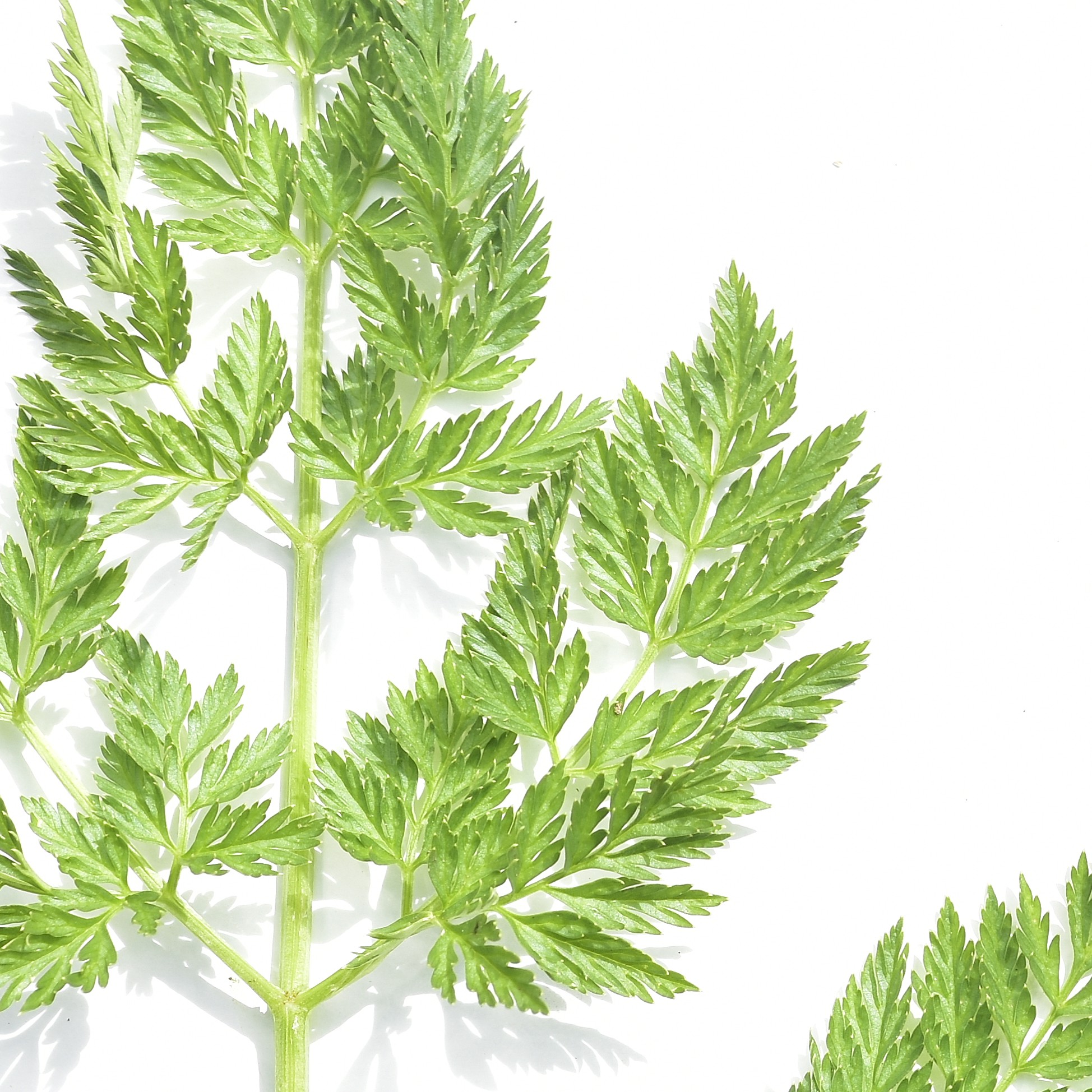
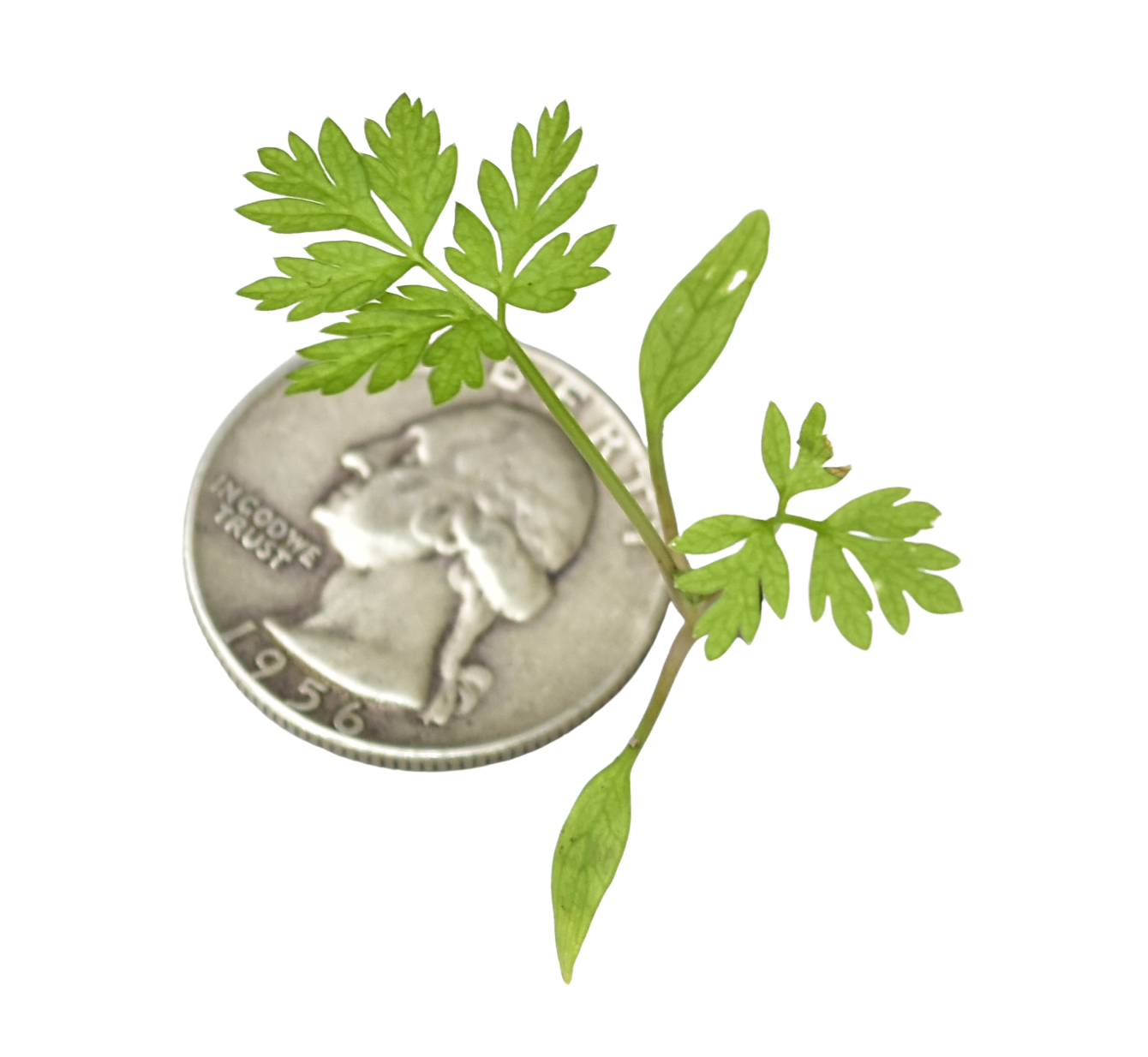
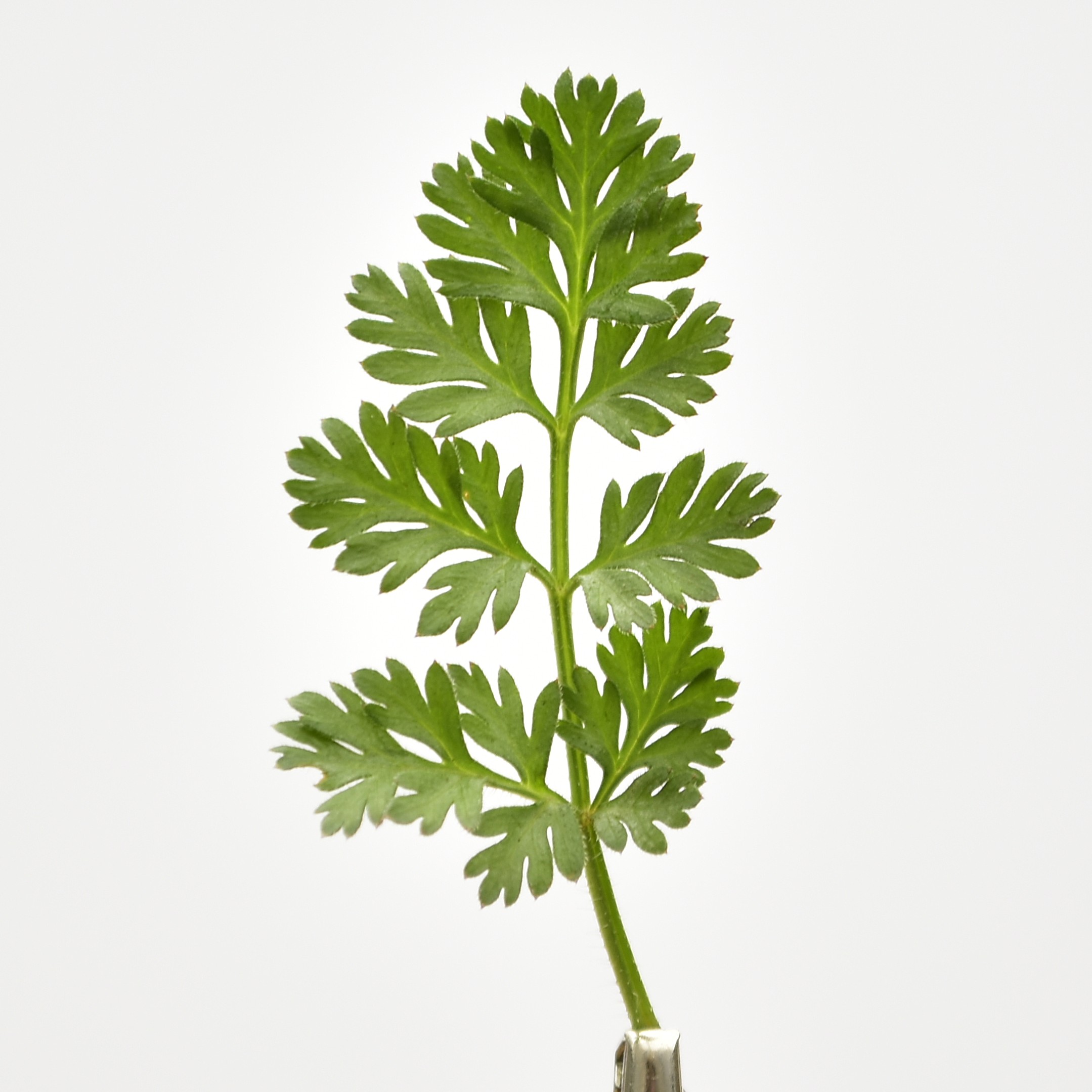
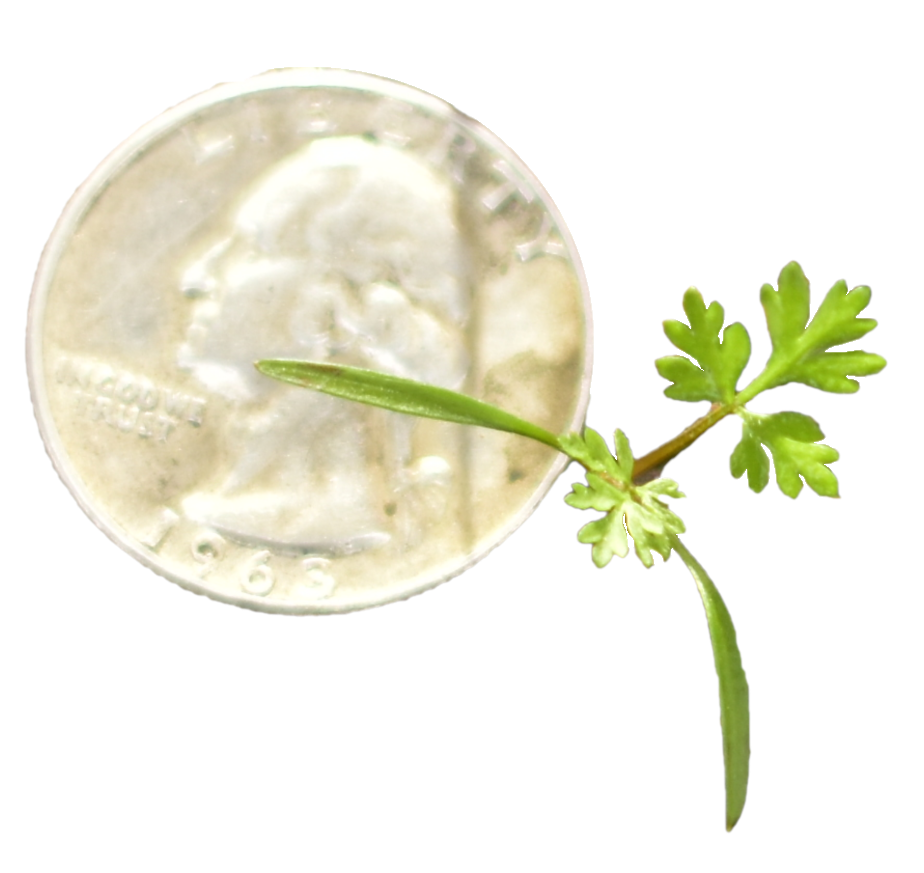
Difference: ☠️ Poison Hemlock leaves are overall much larger, more fern-like in appearance, and form a wider triangular shape. The petiole is blotched with reddish/purple spots. The petiole sheath is comparably larger and forms a “collar” above the attachment point. Ultimate segments form linear points. Entire leaf is hairless. Odor is musty. Seedling’s cotyledons are spearhead (lanceolate) in shape.
🥕
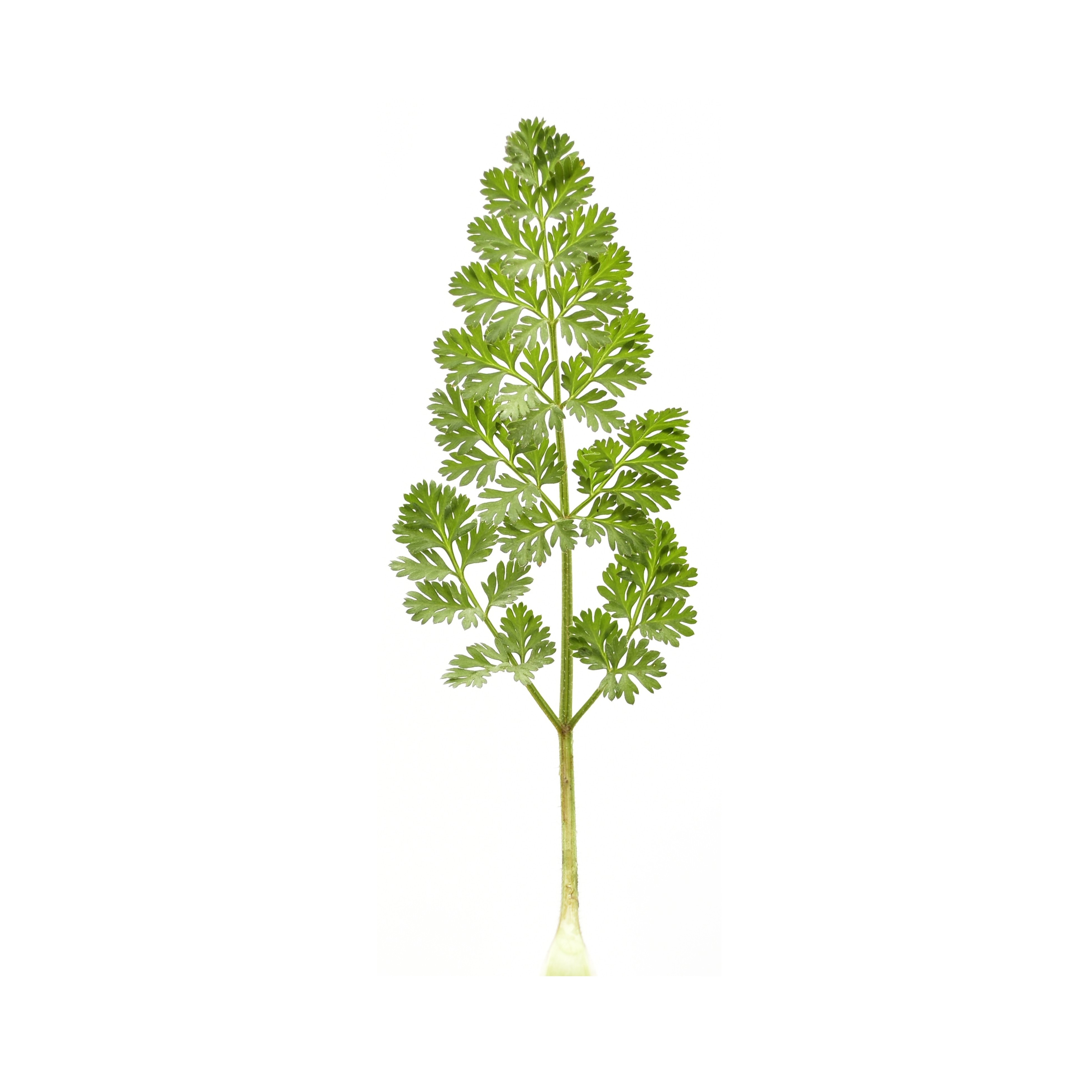
🥕 Wild Carrot leaves are long and slender and comparably much smaller. They are lacy in appearance, and the perimeter outline is somewhat spearhead in shape. The petiole is hairy, sometimes tinged red, never spotted. The petiole sheath is comparably smaller with no “collar” formation. Ultimate segments are curvy before terminating to a point. Entire leaf has fine hairs. Odor is herbal and carrot-like. Seedling’s cotyledons are long and narrow (narrow‑lanceolate).

🥕
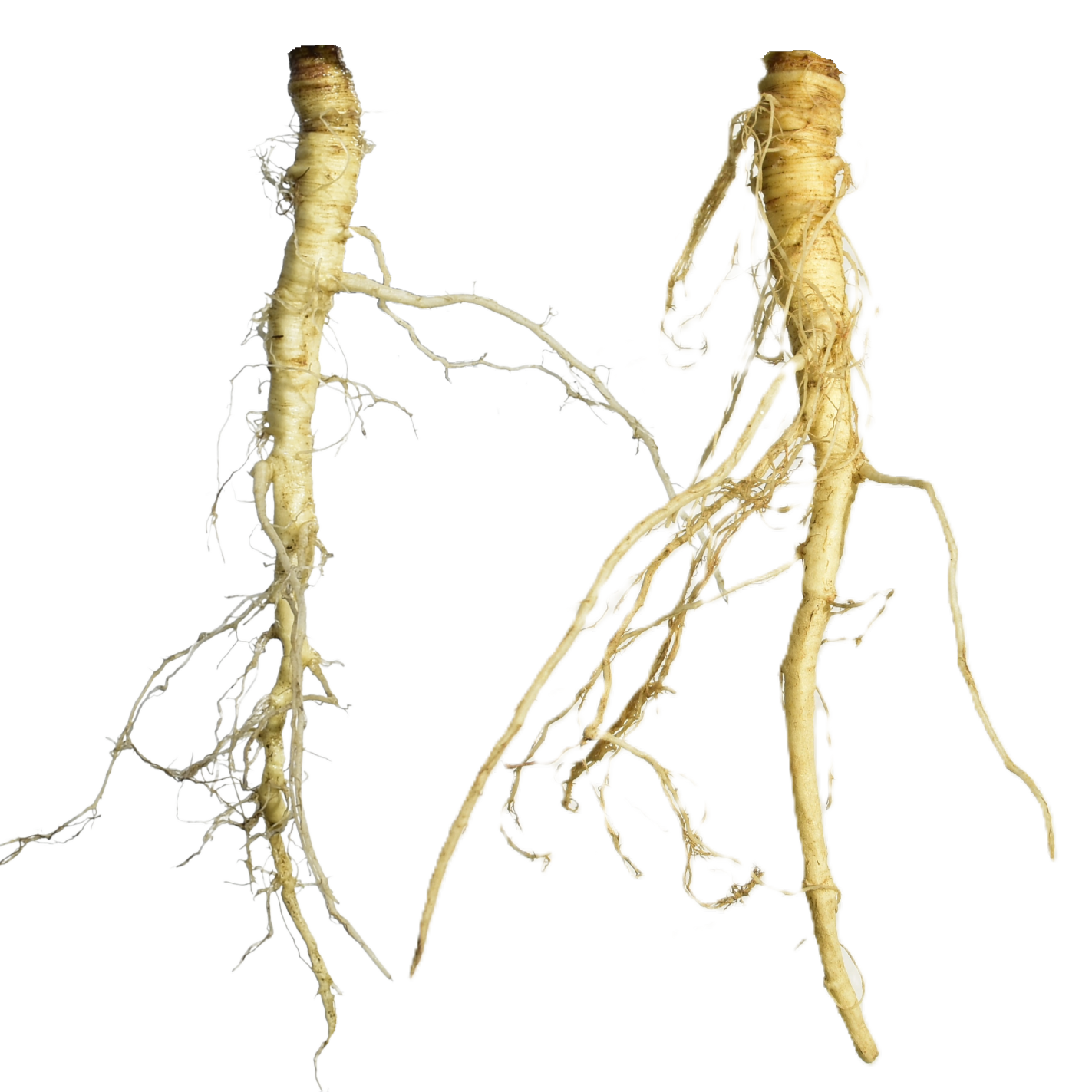
-Taproot
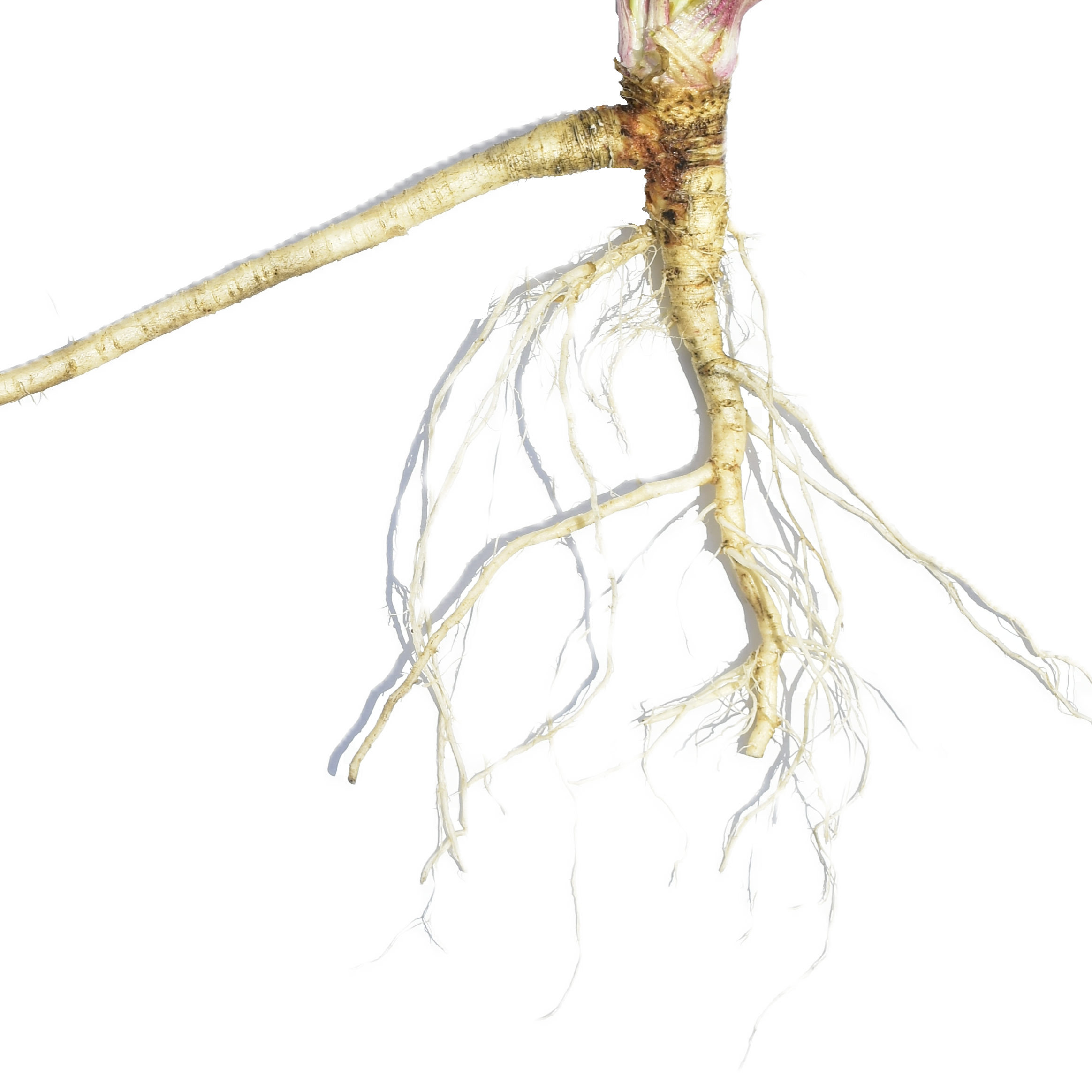
Similarity: Both produce a fleshy taproot with a ridged surface, often branching in rocky soil, with fine lateral roots, tan to off-white in color.
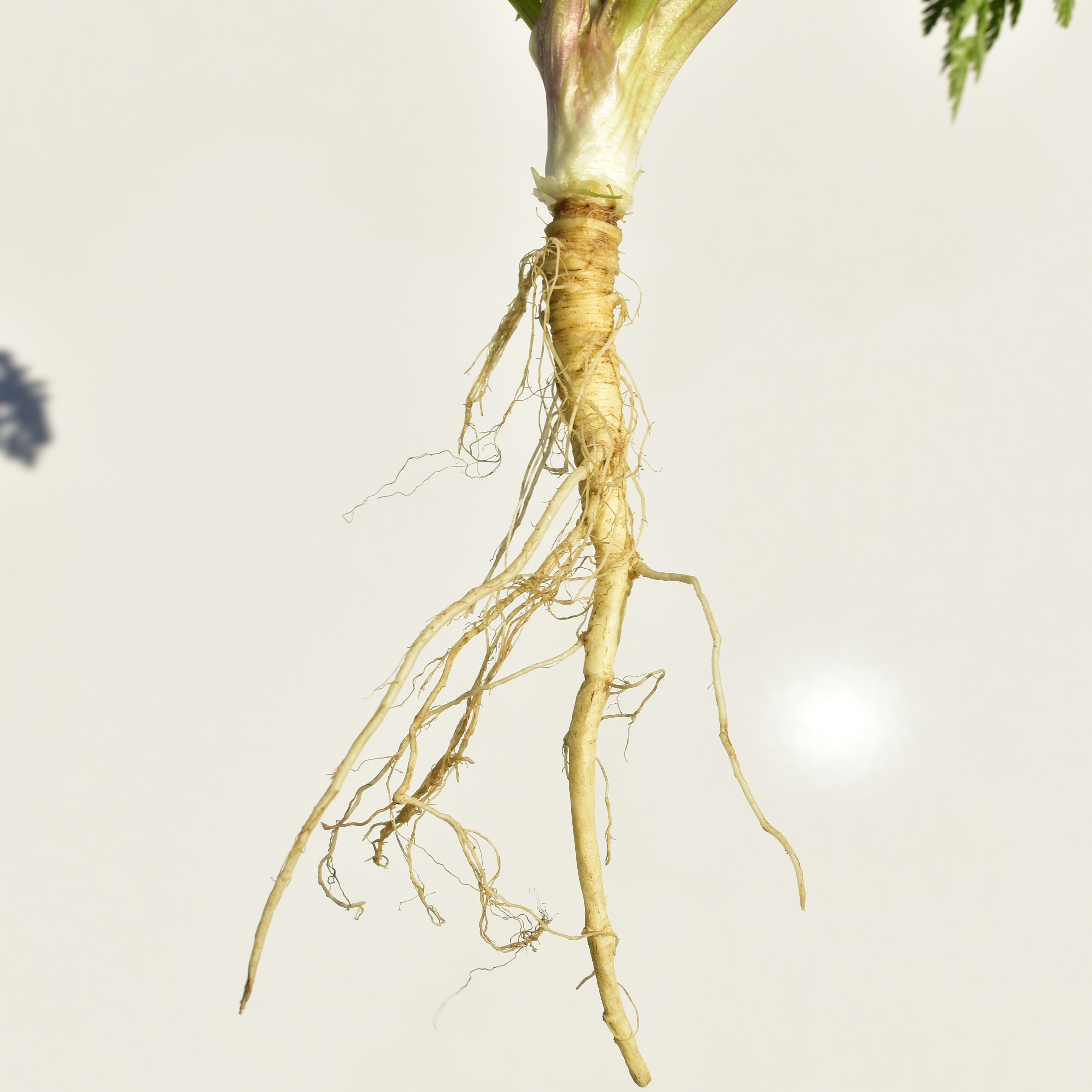
Difference: ☠️ Poison Hemlock roots are generally bulkier in size. The flesh is tender and sources report that they remain tender during flower production (I have not verified this myself). Color is off-white to tan but can sometimes have a yellow tint. The smell is musty and unpleasant with some comparing it to mouse urine. *A small percentage of individuals may find the aroma inviting, even comparing it to carrot. Victims of poisoning have reported the flavor as being palatable; comparable to parsnip or carrot, having no discernable indication of toxins. Yikes!

🥕
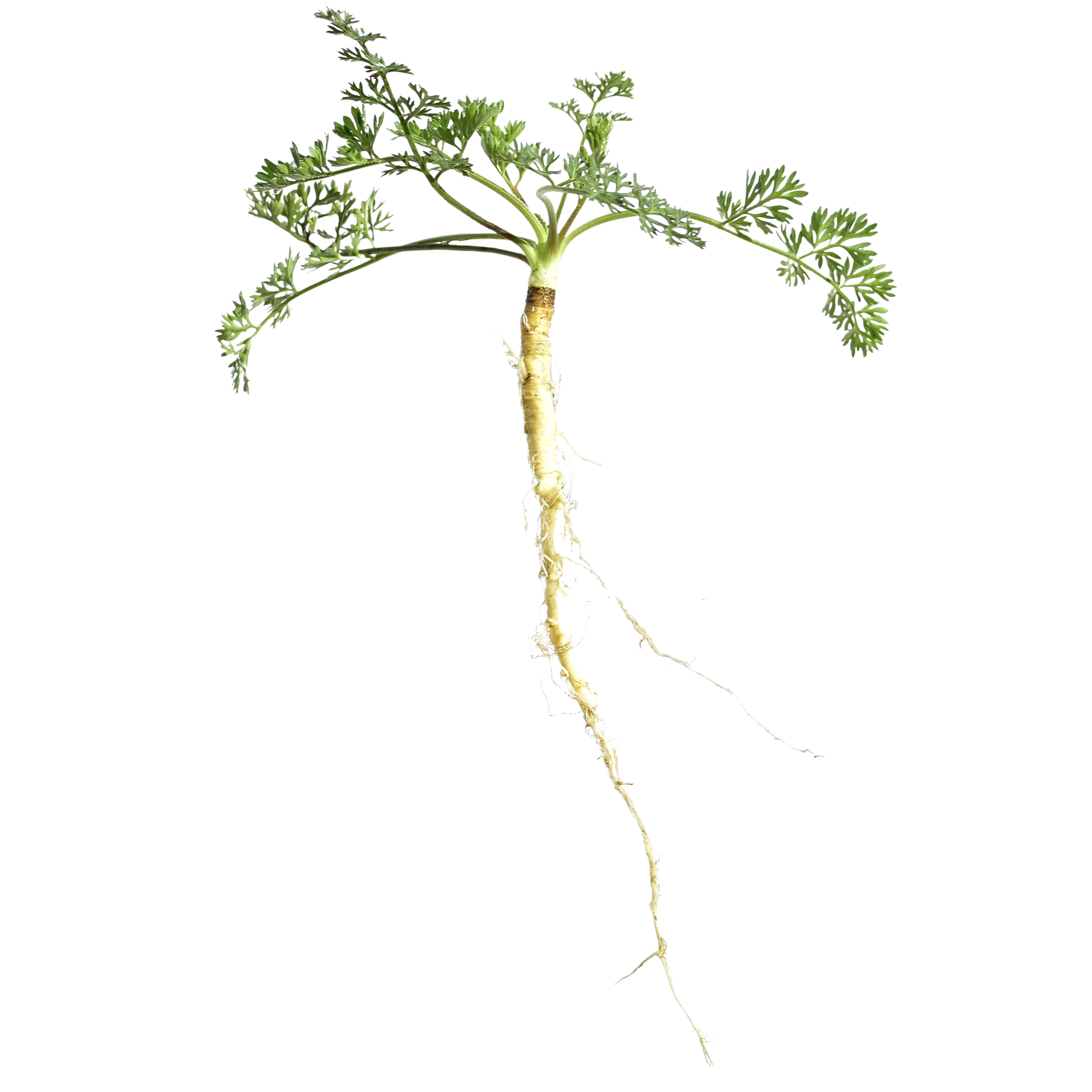
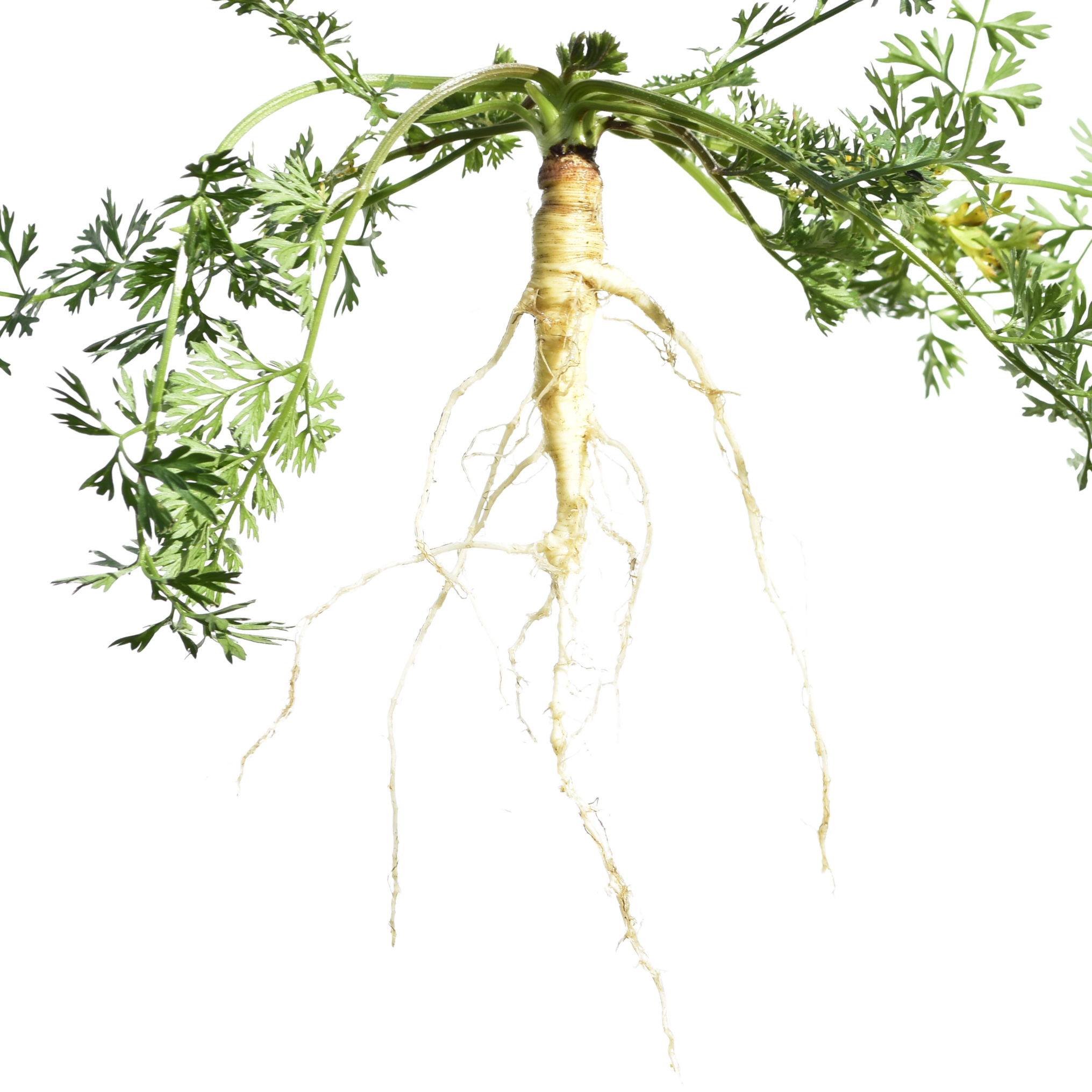
🥕 Wild Carrot has a long, slender taproot (5-9″long) with an average diameter of 1/4 to 5/8 inches. It tapers quickly from the crown producing fine lateral roots. In first-year plants, the texture is slightly fibrous but still edible, however, it will lignify during flower production, rendering it too woody to chew. The color is off-white. The odor is distinctively carrot with an earthy spice.
🥕
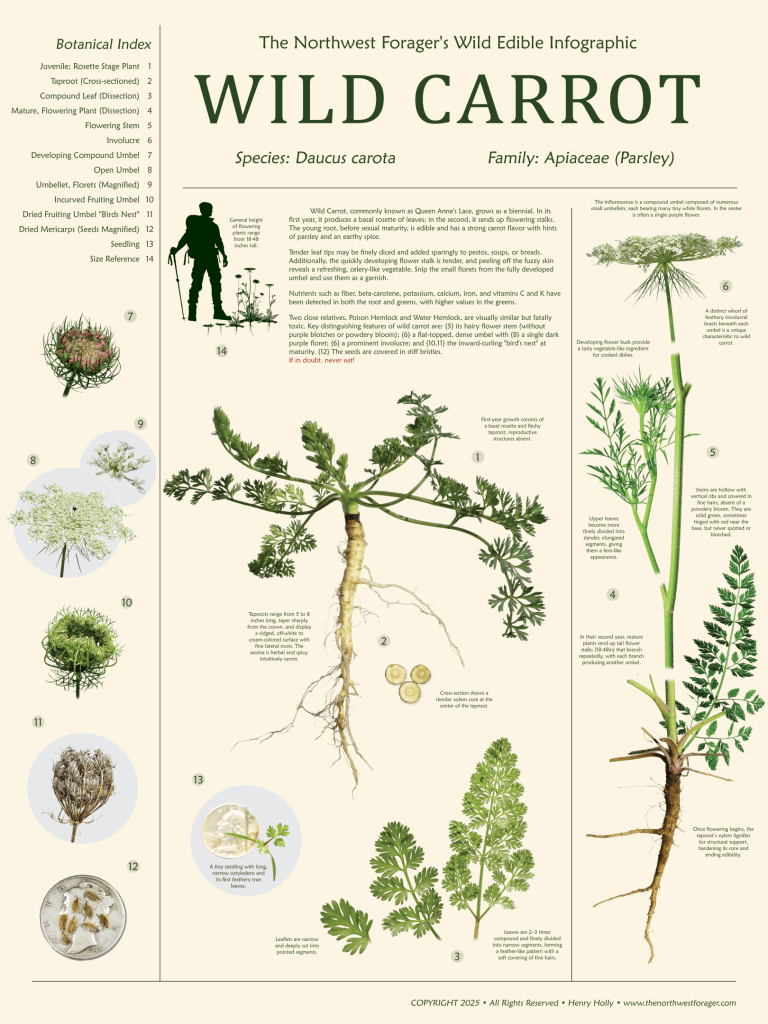
For the educator, enthusiast, or nature admirer, I’ve designed a Wild Carrot infographic poster that highlights all of its identifiable features.
It measures 18×24 inches and is printed on heavy-duty, museum-grade paper in a matte finish. The quality is exceptional, and I’ve been enjoying my own copy!
If you’re interested in helping support this type of educational work, or just love how it looks, please consider purchasing a copy of your own. https://www.etsy.com/listing/4406587811/botanical-wild-carrot-matte-poster
🥕
–Conclusion
The most discernable identifiable features will be present during flower production.
🥕 For Wild Carrot, its unique traits include an overall height of 18 to 48 inches tall; a densely clustered, flat-topped umbel with a single purple floret and prominent involucre; a flower stem covered in fine hairs, absent of reddish/purple blotches and absent of a powdery bloom; smelling strong of carrot.
☠️ For Poison Hemlock, it has an overall size and height easily exceeding that of Wild Carrot (48″ to 96″+); a loosely clustered, arc-shaped umbel with no purple floret and lacking a distinguished involucre; a smooth, hairless flower stem covered in reddish/purples blotches and often with a white, powdery film; a strong musty smell, sometimes described as mouse urine.
Confusion is most likely to occur in first year plants of similar age before Poison Hemlock exceeds a comparable size. Even at this stage look for Poison Hemlocks reddish/purple blotches on the leaf petiole; a “collar” on the petiole sheath; linear ultimate segments on the leaflets; a wider, overall triangular leaf shape vs a lanceolate (spearhead) shape; and a musty smell when crushed.
Never eat if you are not 100% certain of your identification!
Thank you for reading and please consider subscribing to receive alerts for future articles.
As always,
Happy Foraging!
All photographs of Henry Holly are the original work of the creator and are fully protected under U.S. and international copyright law. Commercial use, reproduction, distribution, or modification of these images is strictly prohibited without prior written permission.
Non‑profit organizations — including universities, state and national parks, educators, and conservation programs — are encouraged to reach out to request permission for approved educational use.
Discover more from The Northwest Forager™
Subscribe to get the latest posts sent to your email.
 The Northwest Forager™