Winter might seem like the least promising time of year to forage, but the cold season hides more food than you’d expect. Thanks to the process of dormancy, many perennials and biennials are conserving their stored energy underground in the form of starch and complex sugars. Even when the landscape looks barren above ground, the soil below holds energy‑dense roots, rhizomes, tubers, and bulbs — the kind of fuel that helps keep a body warm on frigid days.
The list below highlights 10 Wild Edible Roots you can reliably find throughout the Pacific Northwest — and in much of North America — even in the heart of winter.
#1 Dandelion – Taraxacum officinale
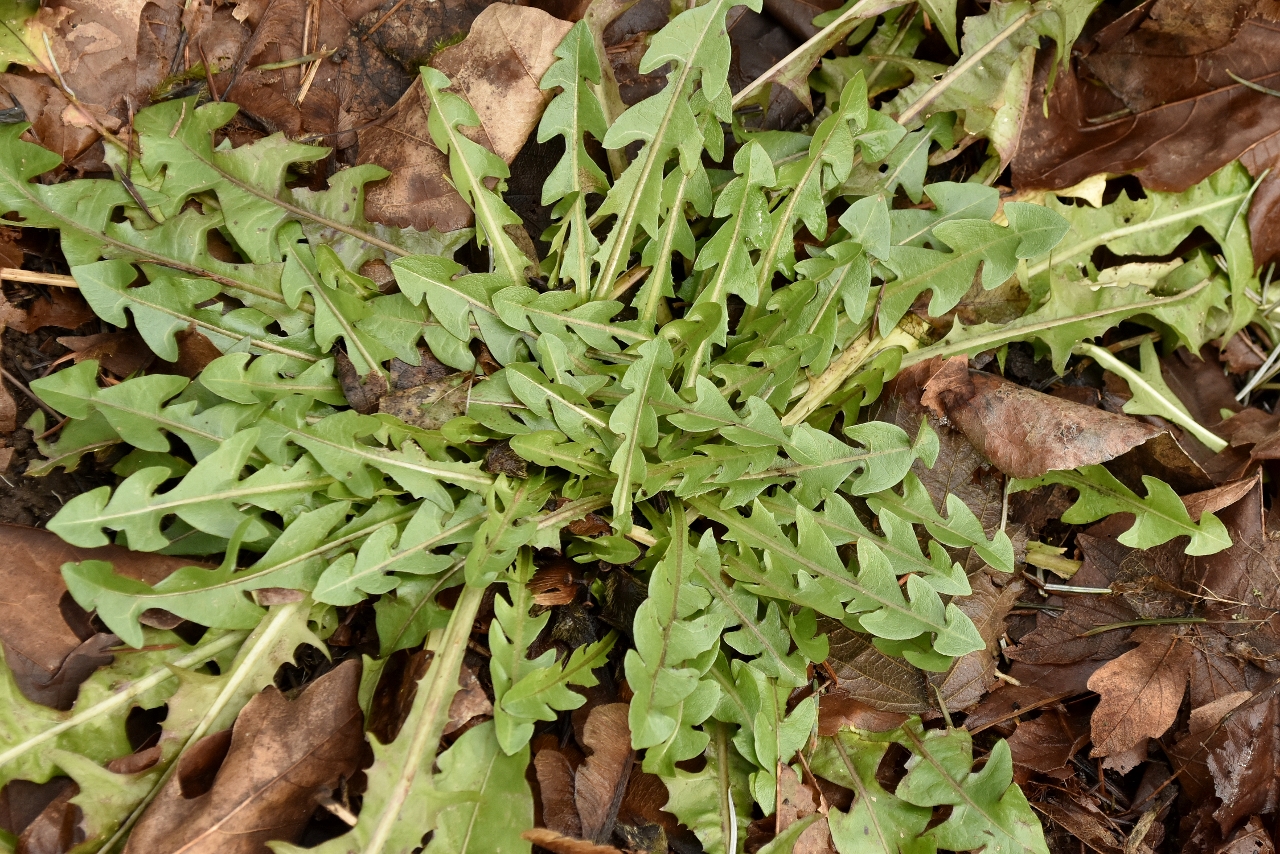
Number one on this list is the dandelion. Not because it’s the most glamorous plant, but because everyone already knows exactly where to find it. Most gardeners who’ve wrestled with this infamous weed can vouch for its persistence. The greens are both nutritious and medicinal, but here we’re focusing on the bitter, earthy taproot. Many people shy away from bitter flavors, yet with the right approach, that bitterness becomes an asset. One of the best ways to use it is by turning the taproot into a surprisingly satisfying coffee substitute.
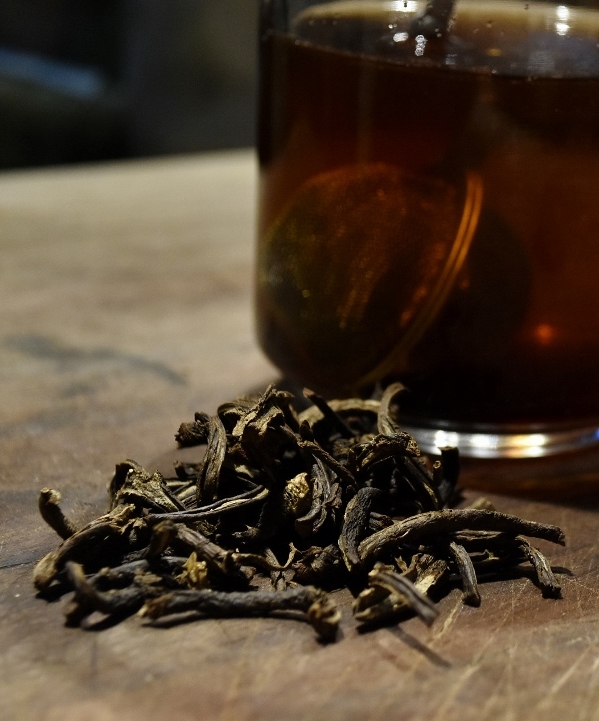
Roasted Dandelion Coffee Recipe
1) Wash roots of all dirt and pat dry with a towel. Split the roots into quarters lengthwise, then chop into short segments.
2) Dehydrate the chopped pieces until they can be broken with a clean ‘snap’.
3) Heat oven at 350°F (175°C), lay the dried roots out on a cookie sheet, and bake for 10 to 20 minutes. The blacker the roots, the more of a “French roast” you’ll get. Overbaking, however, will eventually reduce this into carbon.
4) Brew like a tea by steeping in hot water 210°F (98°C) for 5-10min.
You can enjoy Roasted Dandelion root year-round!
🥕
#2 Cattail – Typha latifolia
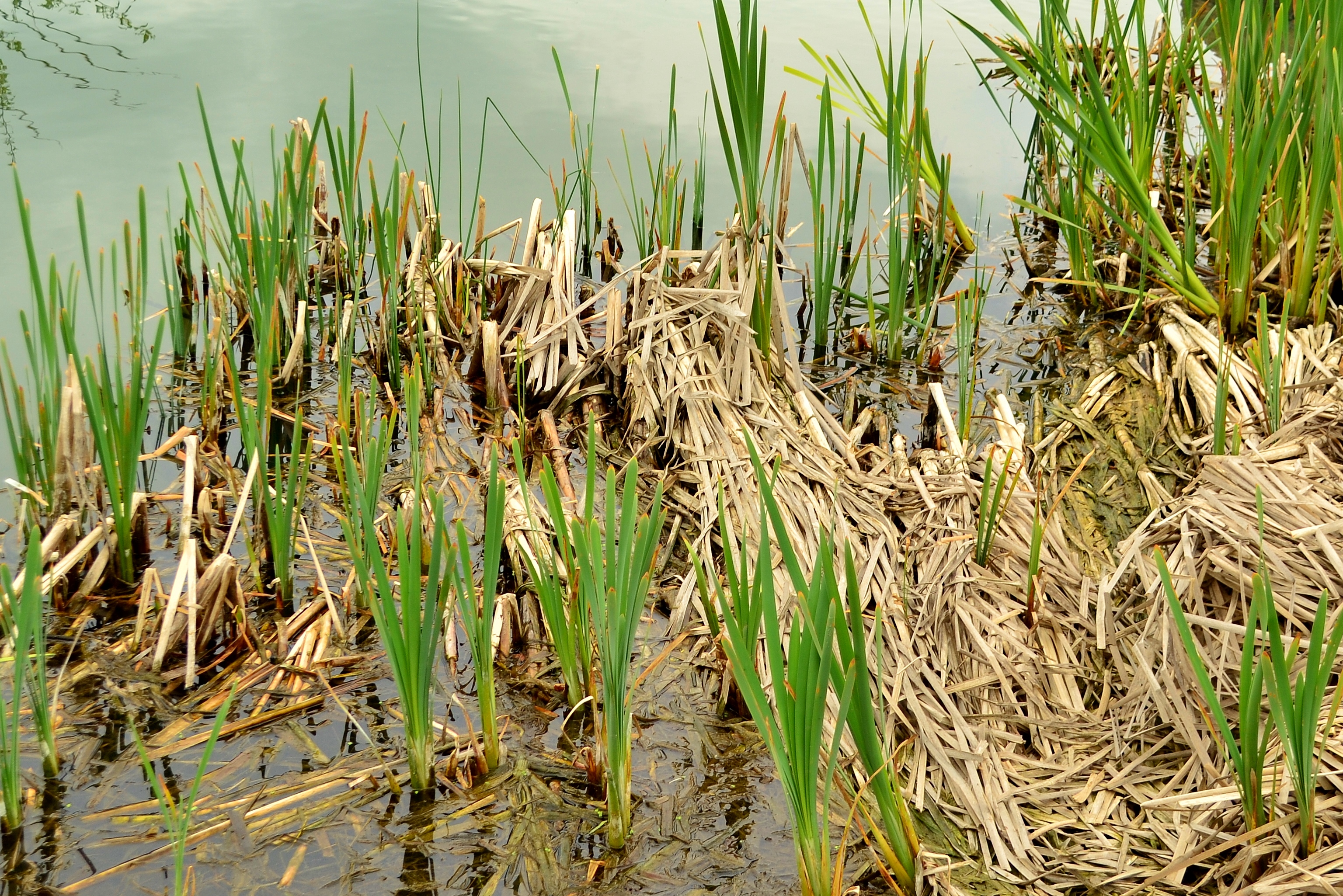
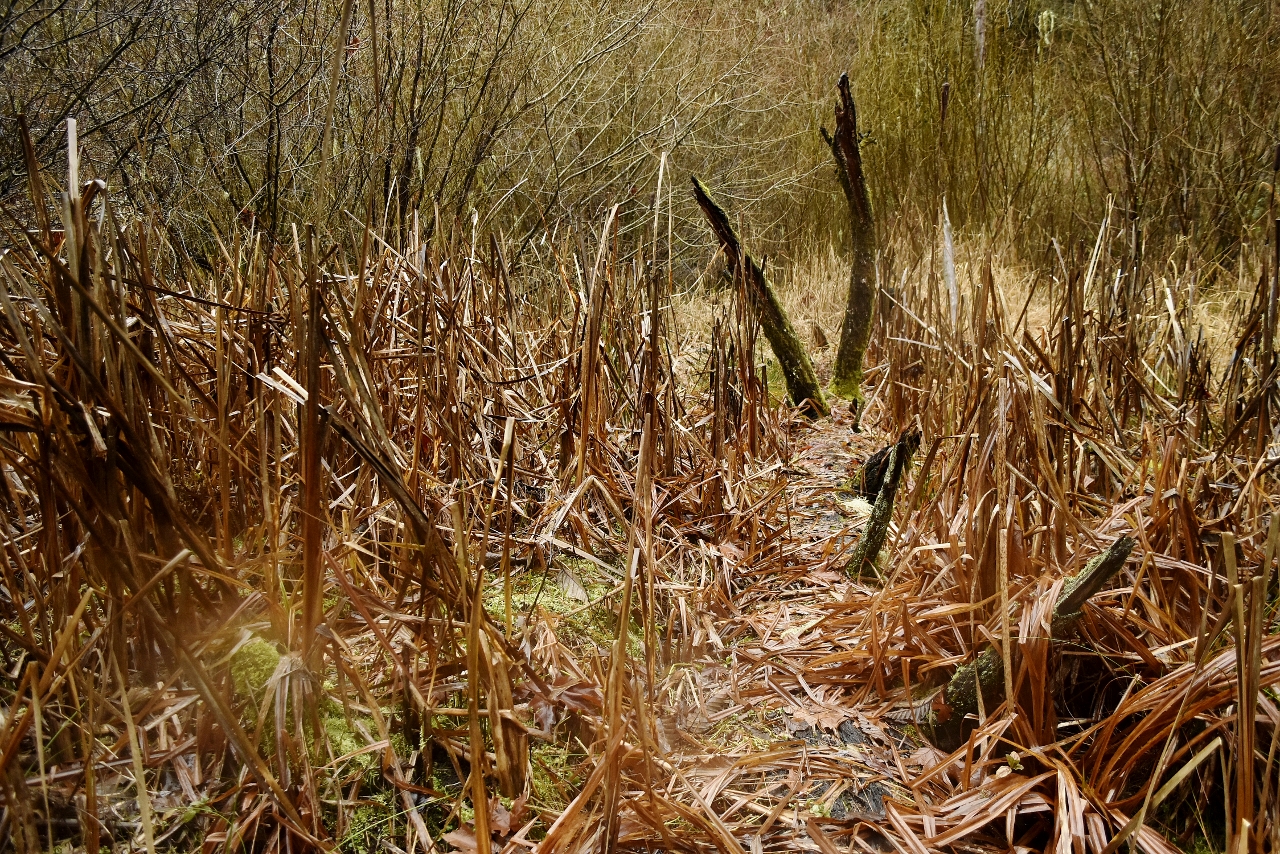
There isn’t much a forager doesn’t love about cattails. Their uses are so numerous they’re well beyond the scope of this article. What’s useful now is the rhizome — plump, starchy, and loaded with carbohydrates and a modest amount of protein available throughout the winter months.
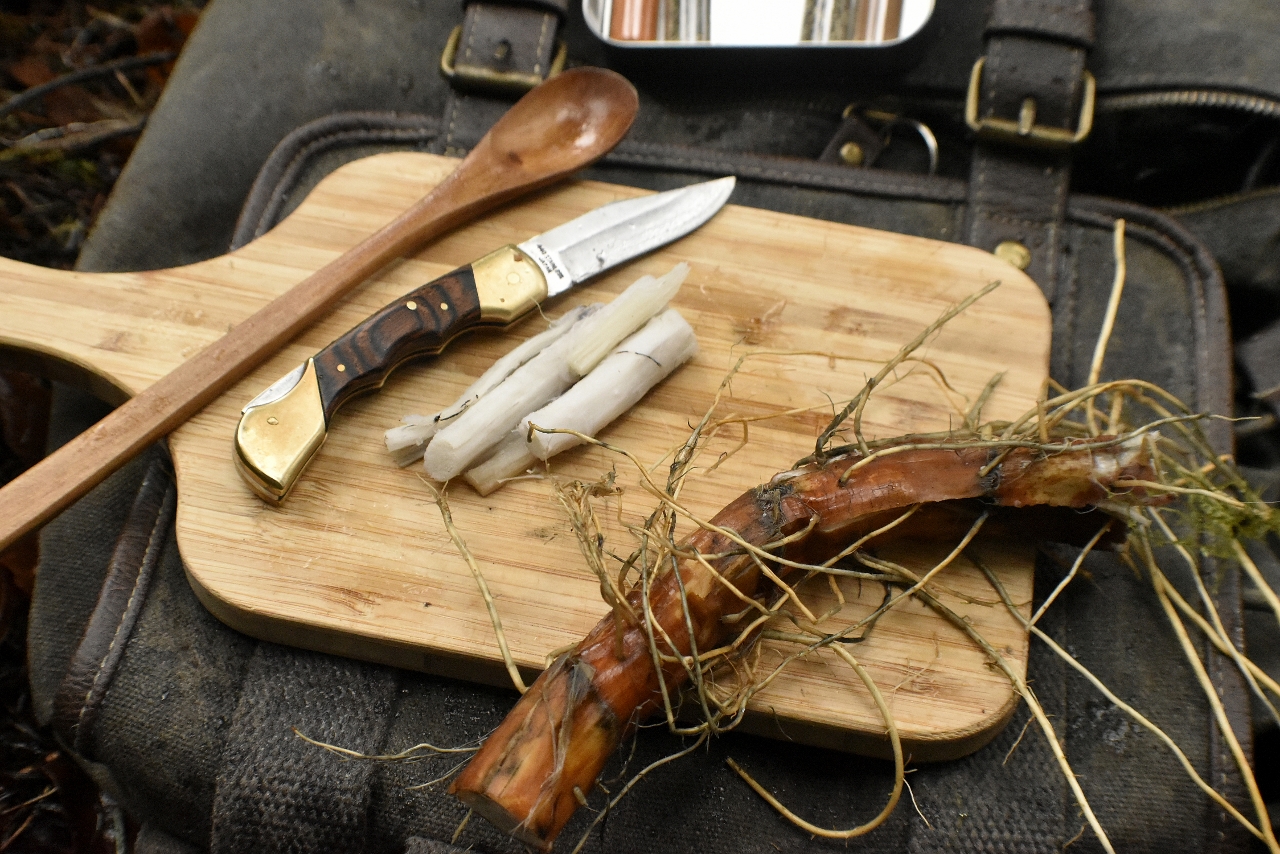
Harvesting them is straight-forward. Dig around the youngest shoots to uncover the fresh rhizomes. After a thorough rinse, use a paring knife to strip away the brown outer skin and expose the white, starchy core. From there, you can cook and mash the core into a hearty soup thickener, or dehydrate it and grind it into a flour. Whichever method you choose, be mindful of the tough, fibrous strands running through the rhizome. Take a little extra time to strain them out so they don’t end up in the final dish. The flavor lands somewhere between corn and potato, with a faint grassy note reminiscent of wheatgrass.
🫚
#3 Bull Thistle – Cirsium vulgare
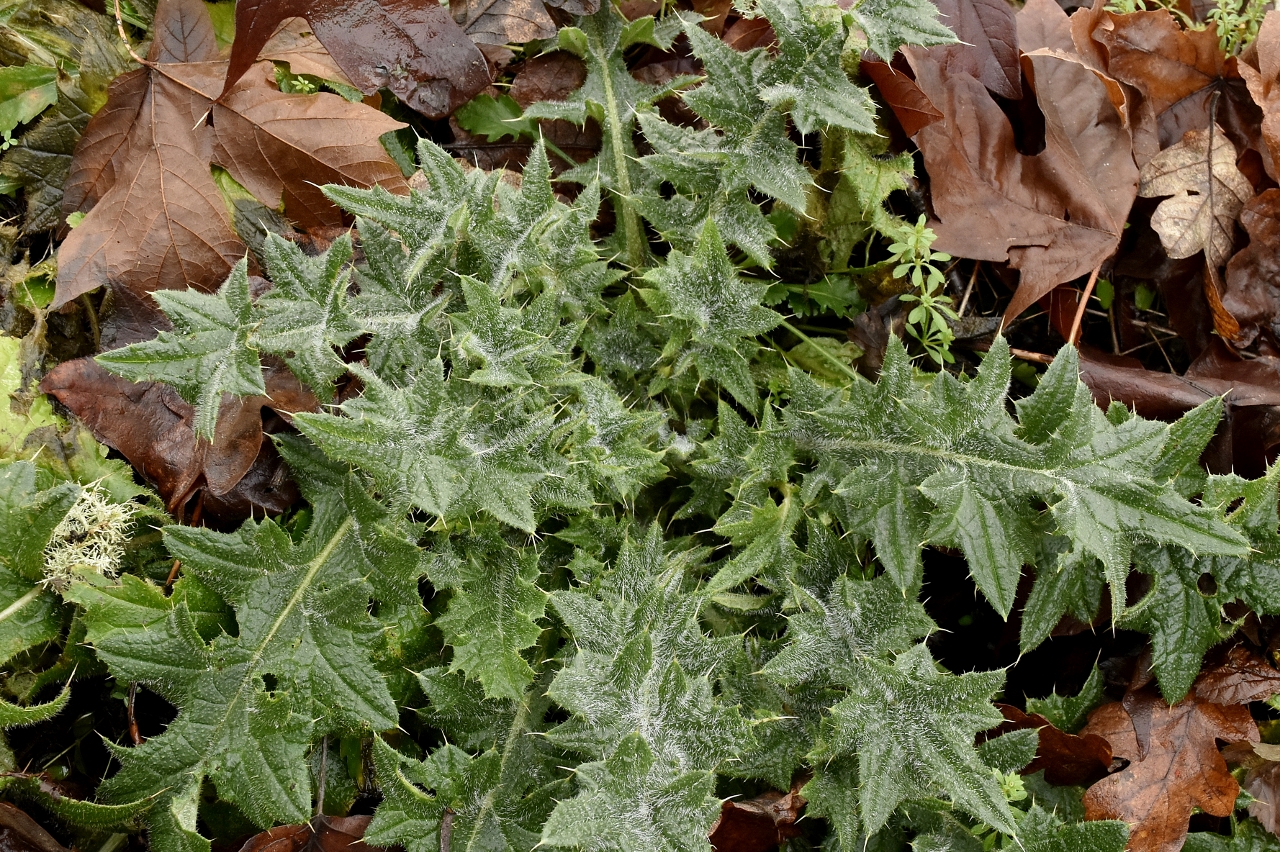
All true thistles belong to the sunflower/daisy family (Asteraceae), and every one of them is considered edible. Bull thistle, though non‑native to the U.S. and listed as invasive in many states, is no exception. In fact, you can do your local ecology a favor by eating it! The peeled leaves and flower stalks are edible, as are the cooked flower tops. Tasty as those parts are, the crown and taproot are, in my opinion, the real prize.
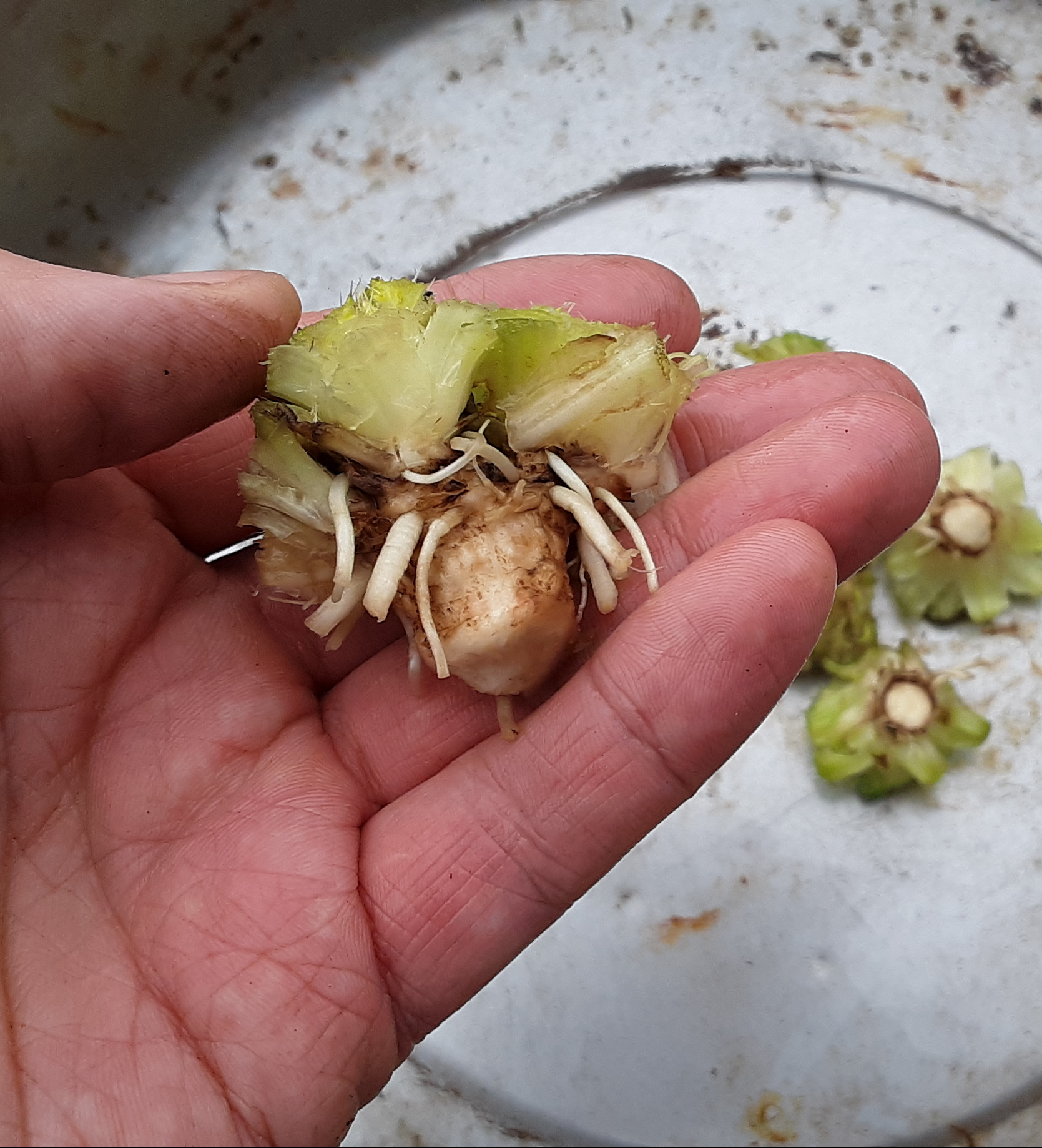
The flavor is strikingly similar to sunchokes — not surprising, given their shared family ties. If you know of a patch, the quickest harvesting method is simple: with gloves and a pair of pruning clippers, snip the rootstock about an inch below the soil line. Then trim away all the leaves, leaving just the root crown. Any remaining spines should be carefully removed before cooking. The cleaned crowns boil beautifully and make a hearty addition to soups or stir‑fries.
🥕
#4 Field Garlic – Allium vineale, spp.

These wild Allium plants are neither true onions nor garlic, yet they carry traits of both. Above ground they resemble loose patches of chives, often appearing in fields, pastures, riverbanks, and watershed edges. Below the surface, they look more like slender green onions attached to clusters of tiny garlic‑like cloves. By summer, they send up what look like miniature garlic scapes. Every part of the plant is edible, raw or cooked, and it makes an excellent all‑purpose seasoning.
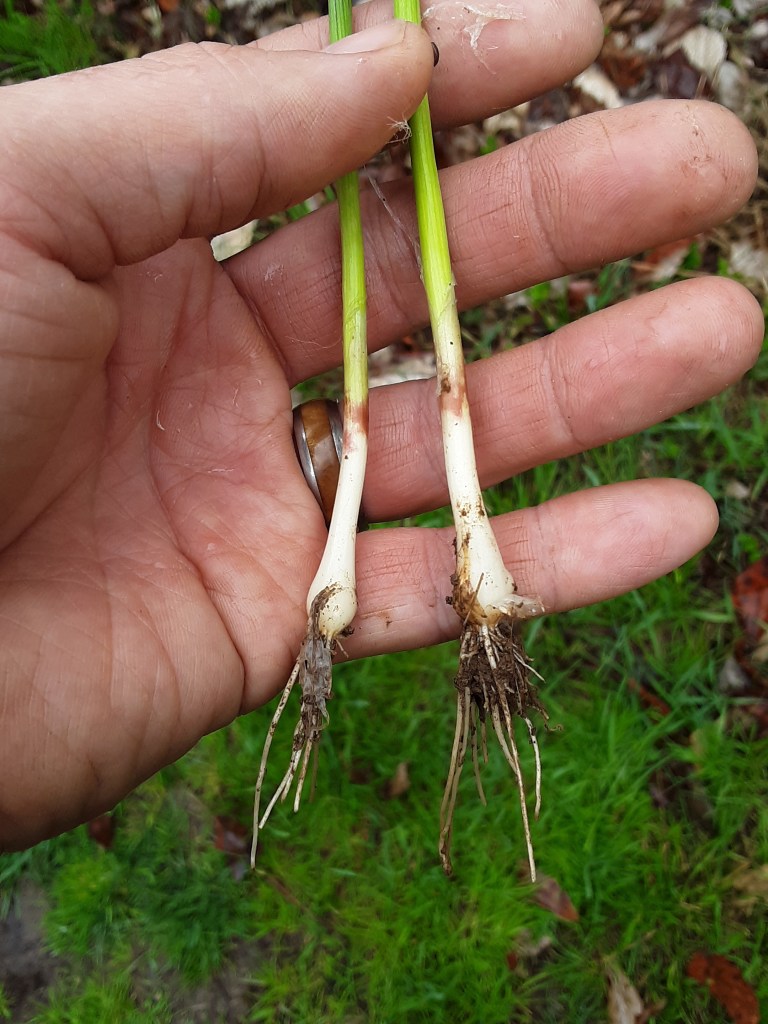
While most foragers are content to gather just the leaves, taking the extra step to process the tiny underground cloves adds a surprising amount of flavor and complex sugars to any meal. As you can observe from the main photo, a single cluster can yield plenty of these miniature bulbs. So the next time you’re out wandering and come across a patch, snap off a piece and give it a sniff. You might just have stumbled onto a true foraging treasure.
Take caution not to confuse them with Death Camas or any unknown lilies, neither of which should have foliage in the winter. Field Garlic will indubitably smell like garlic/onion whereas the former does not.
🧄
#5 Burdock – Arctium minus/lappa
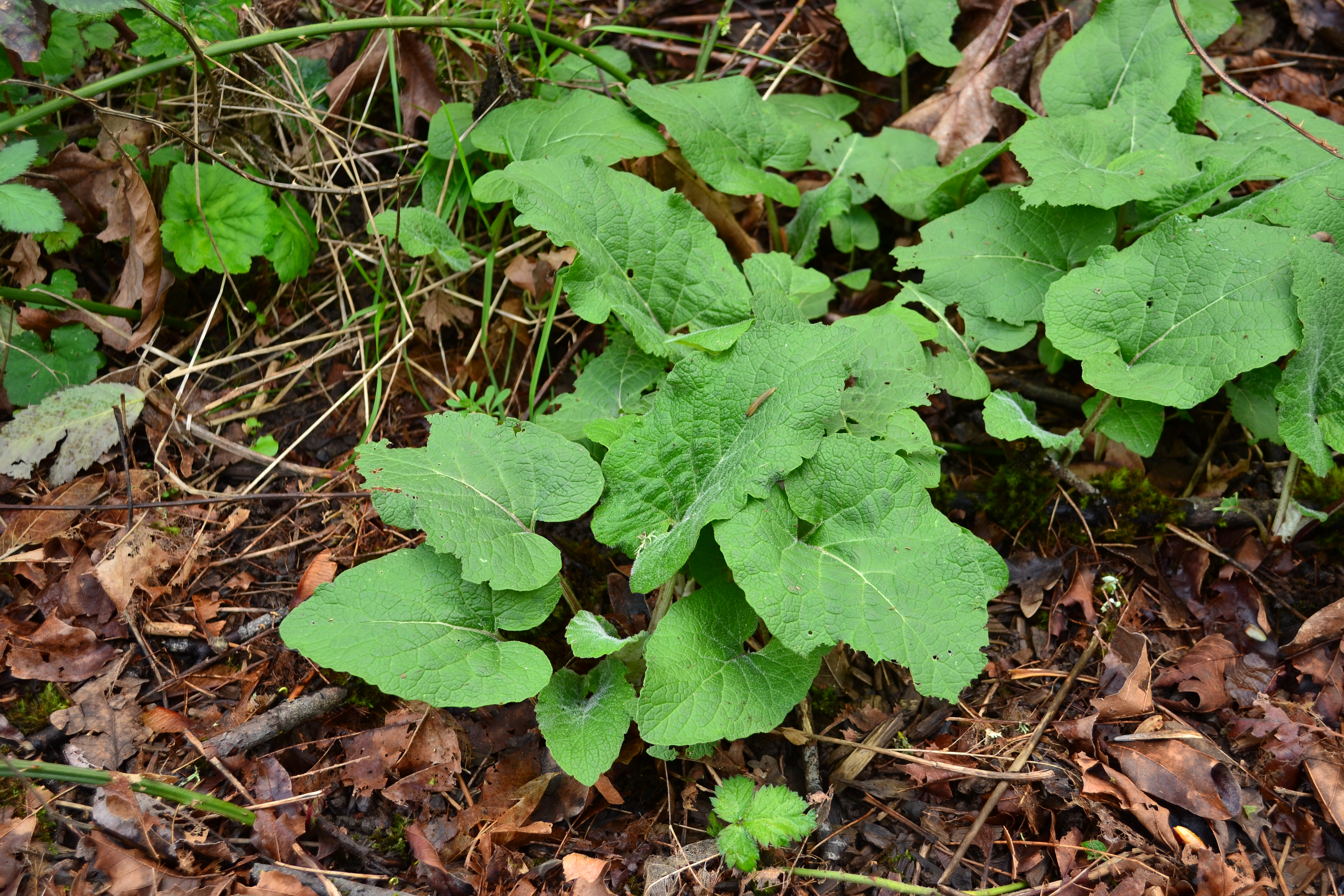
Lesser and Greater Burdock are velvety‑leaved members of the Asteraceae family and close relatives of the thistles. If you don’t recognize them by their broad, soft, slightly funky‑smelling leaves, you’ve probably met them another way — by brushing against their flower cases with Velcro‑like burrs or by pulling them out of your dog’s fur. However you’ve encountered them, it may come as a surprise that burdock hides an impressively large, fully edible taproot. In fact, it has been a staple in parts of East Asia for centuries.
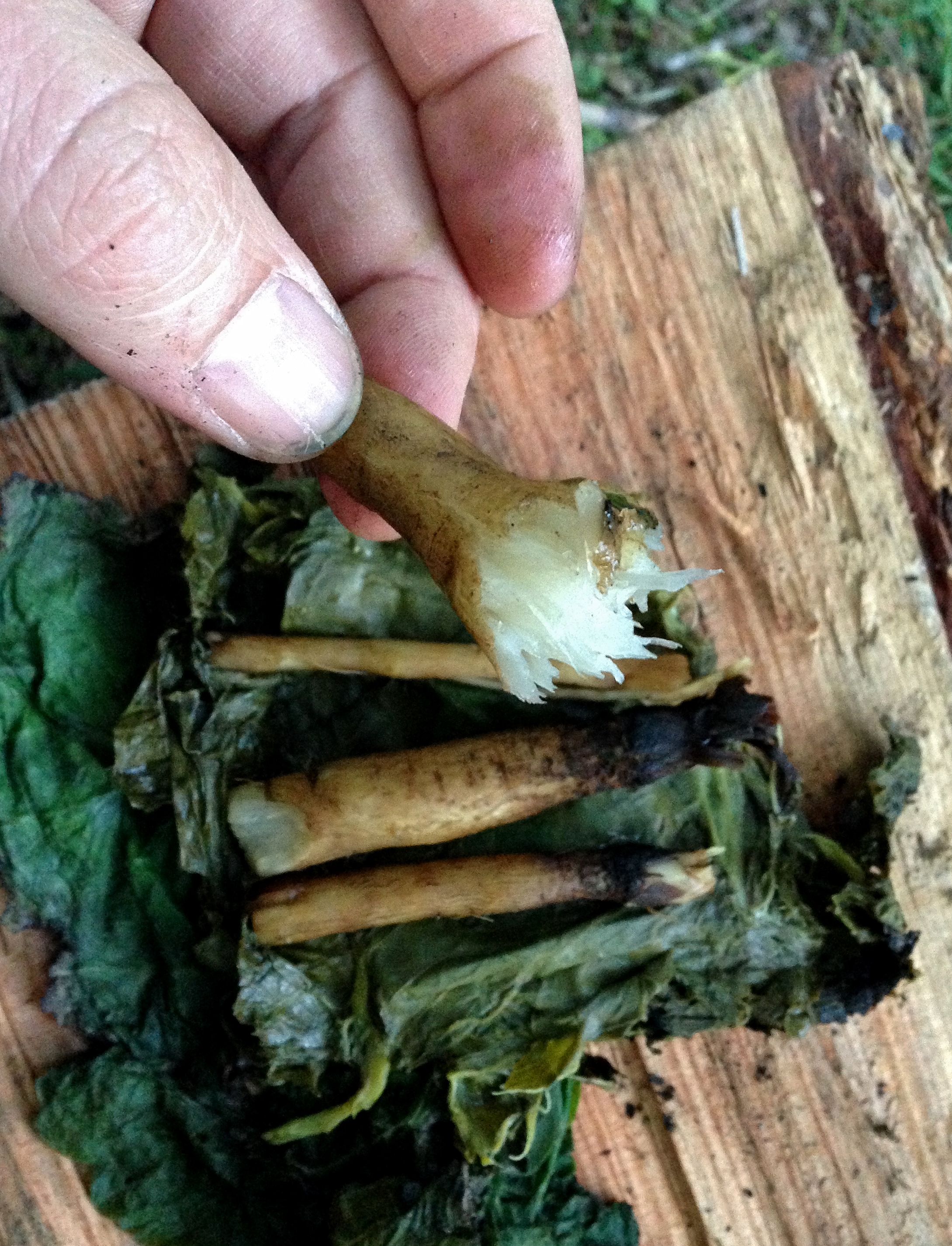
Winter is the ideal time to dig up first‑year plants. They may only sport a couple of leaves, and the root will vary in size, but it will be far more tender. The flavor is reminiscent of bull thistle — an Aster family signature — and the roots shine when slow‑cooked. Boiling, baking, or tossing them into a crockpot all work beautifully, and they hold their texture well. Beyond their culinary appeal, burdock roots are known to be rich in vitamins, minerals, antioxidants, and inulin.
🥕
#6 Dock – Rumex obtusifolius/crispus
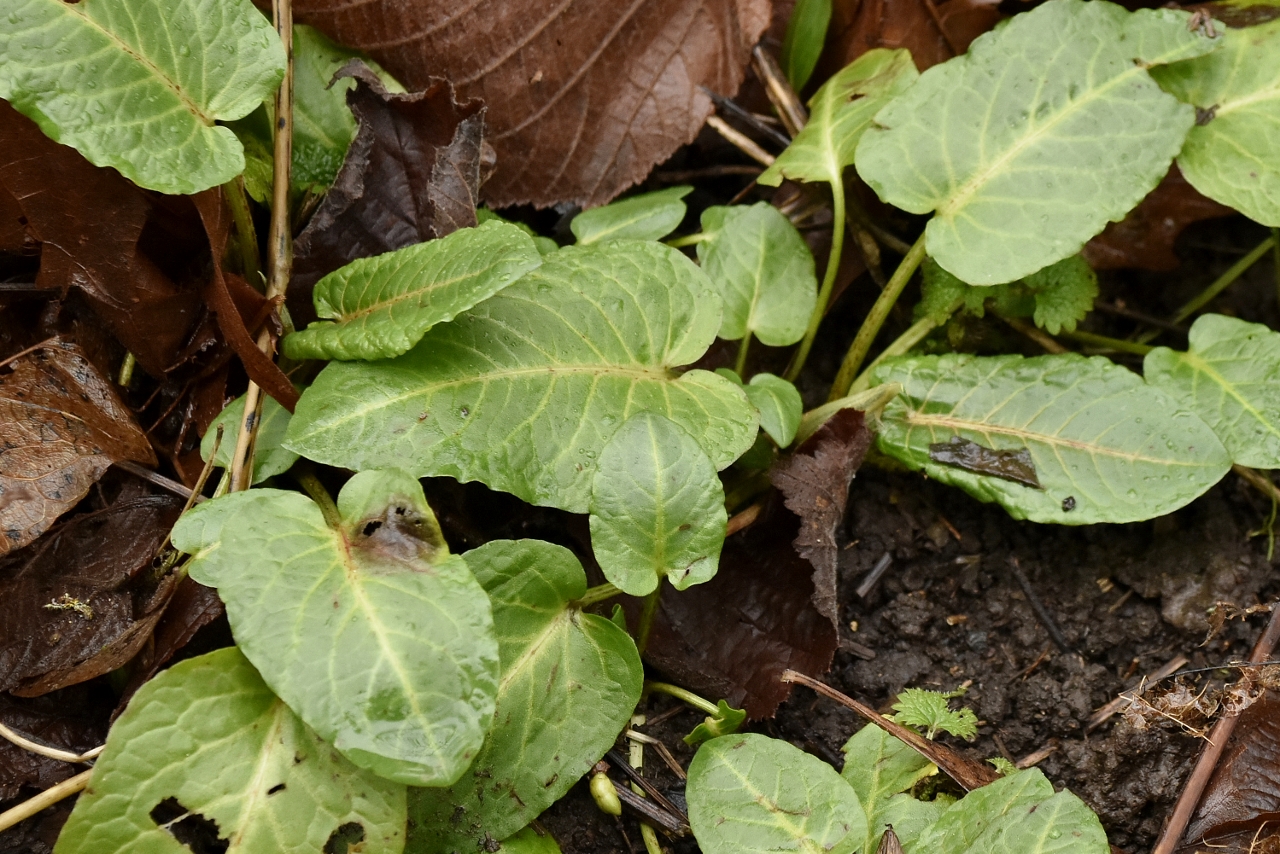
Broadleaved dock (shown in the main photo) and curly dock are common sights in pastures and abandoned lots. Their tall, reddish, papery seed stalks stand out in late summer, and beneath them, within the ground, lie enormous taproots that make “weeding” a losing battle — break the plant off, and it will simply grow back. Curly dock (aka yellow dock) root is valued mostly for its medicinal uses, with long‑standing claims of pain‑reducing, anti‑inflammatory, and liver‑supportive properties.
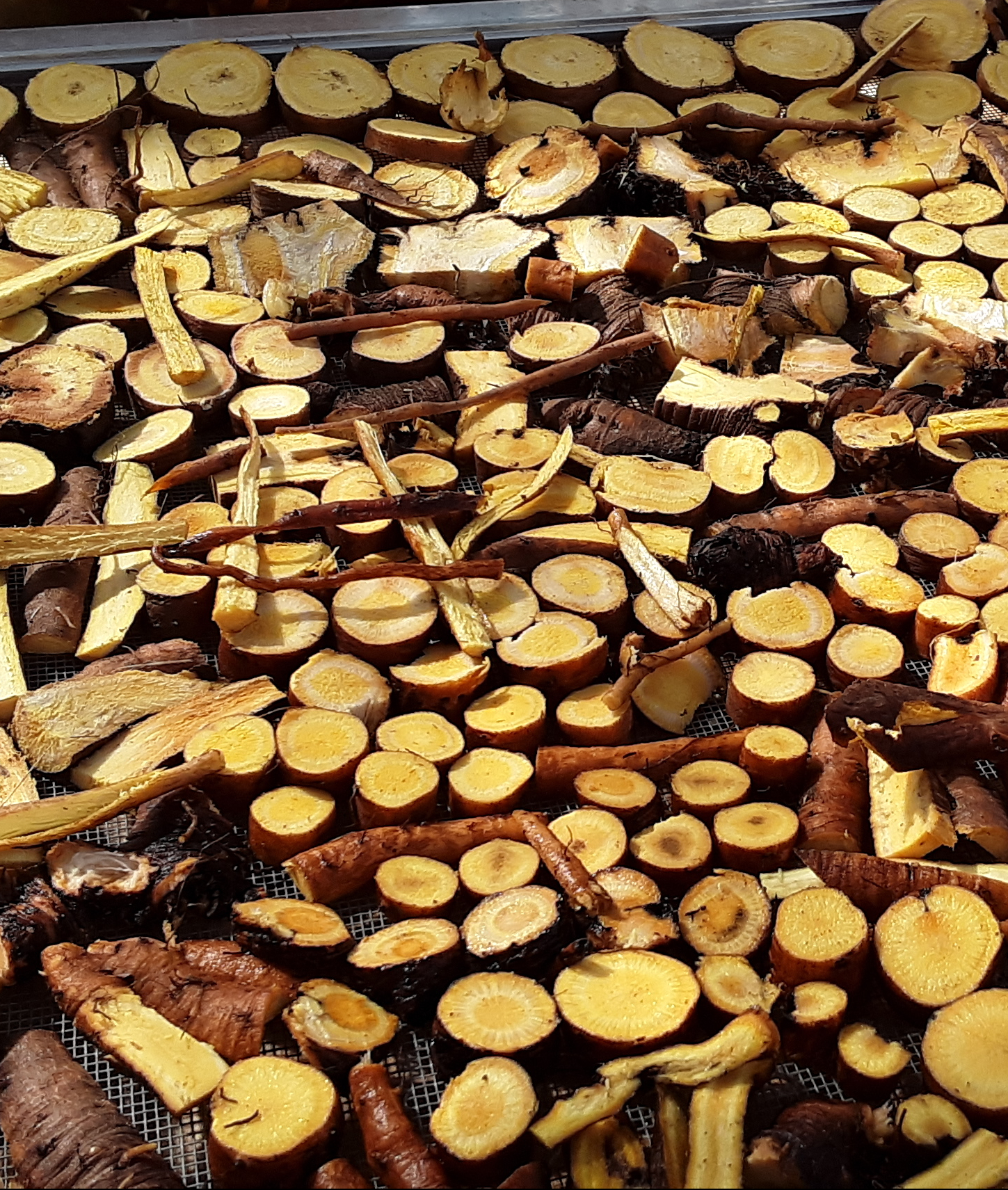
As a food, however, the root shines best as a tea. Some foragers even suggest roasting the dried roots as a dandelion‑style coffee substitute, though I haven’t tested that method myself. Brewed as a tea, yellow dock root produces a beautiful golden color and a flavor reminiscent of dandelion — earthy undertones and herby hues… My autobiography 😉
🥕
#7 Field Mustard – Brassica rapa

Field mustard is an amazingly delicious plant — though that’s coming from someone who happily eats raw broccoli. And speaking of broccoli, field mustard is one of its close relatives, all part of the Brassicaceae family. Often planted as a cover crop, it didn’t take long for this mustard to escape cultivation and become invasive in parts of the U.S. You’ve probably seen it along roadsides in spring, lighting up ditches with bright patches of yellow flowers.
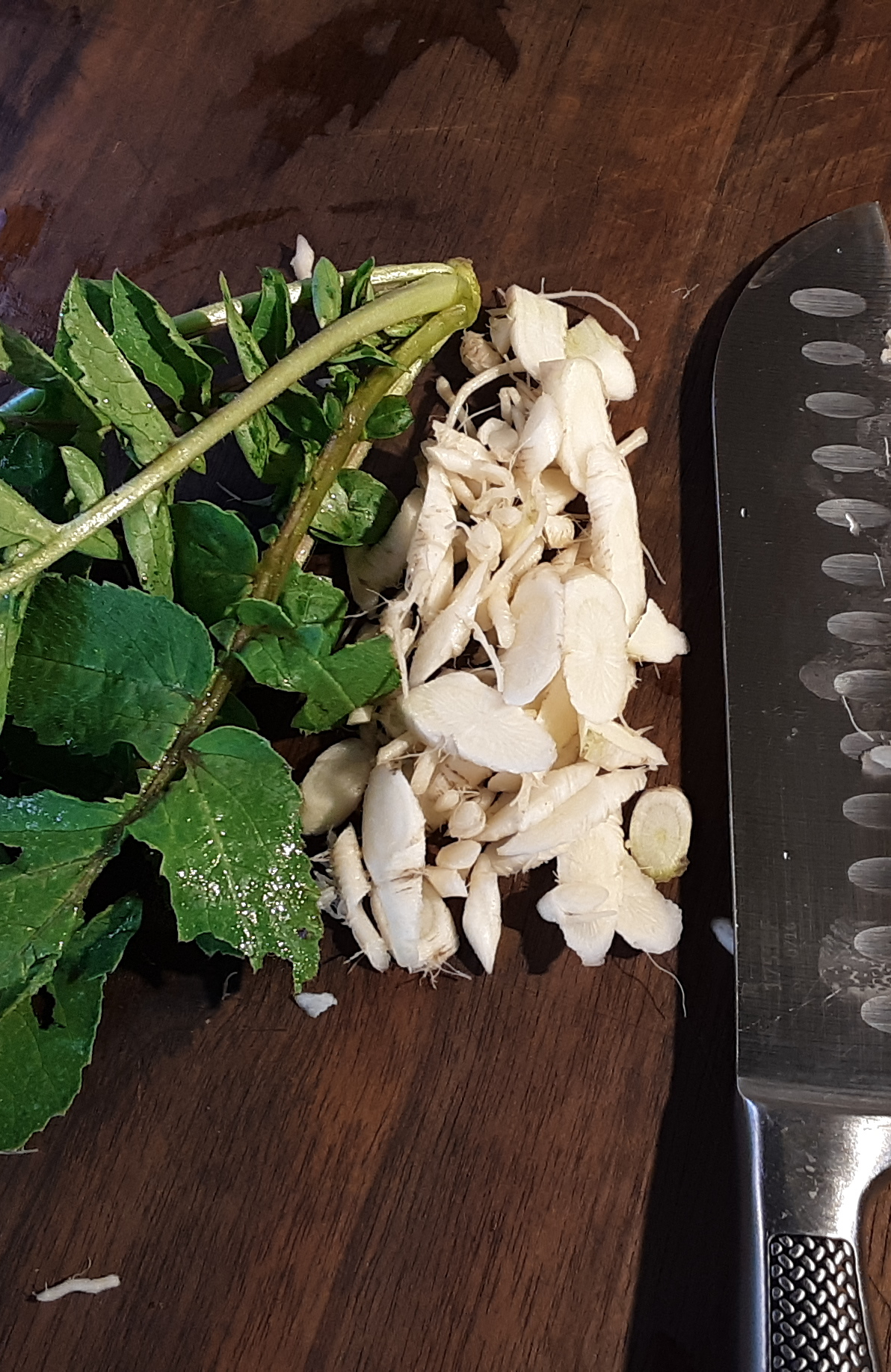
While the whole plant is choice in my book, the large, radish‑like taproot is a wintertime standout. Its flavor ranges from savory turnip to spicy radish, depending on the plant and the soil. It’s also a solid source of fiber, protein, vitamins, and minerals — plenty of reasons to slip some into a soup pot. As with other biennials, the taproot is most tender (though smaller) in first‑year plants. Older, larger roots are still somewhat usable, but they’re best cooked down into soup stock.
🥕
#8 Wapato – Sagittaria latifolia
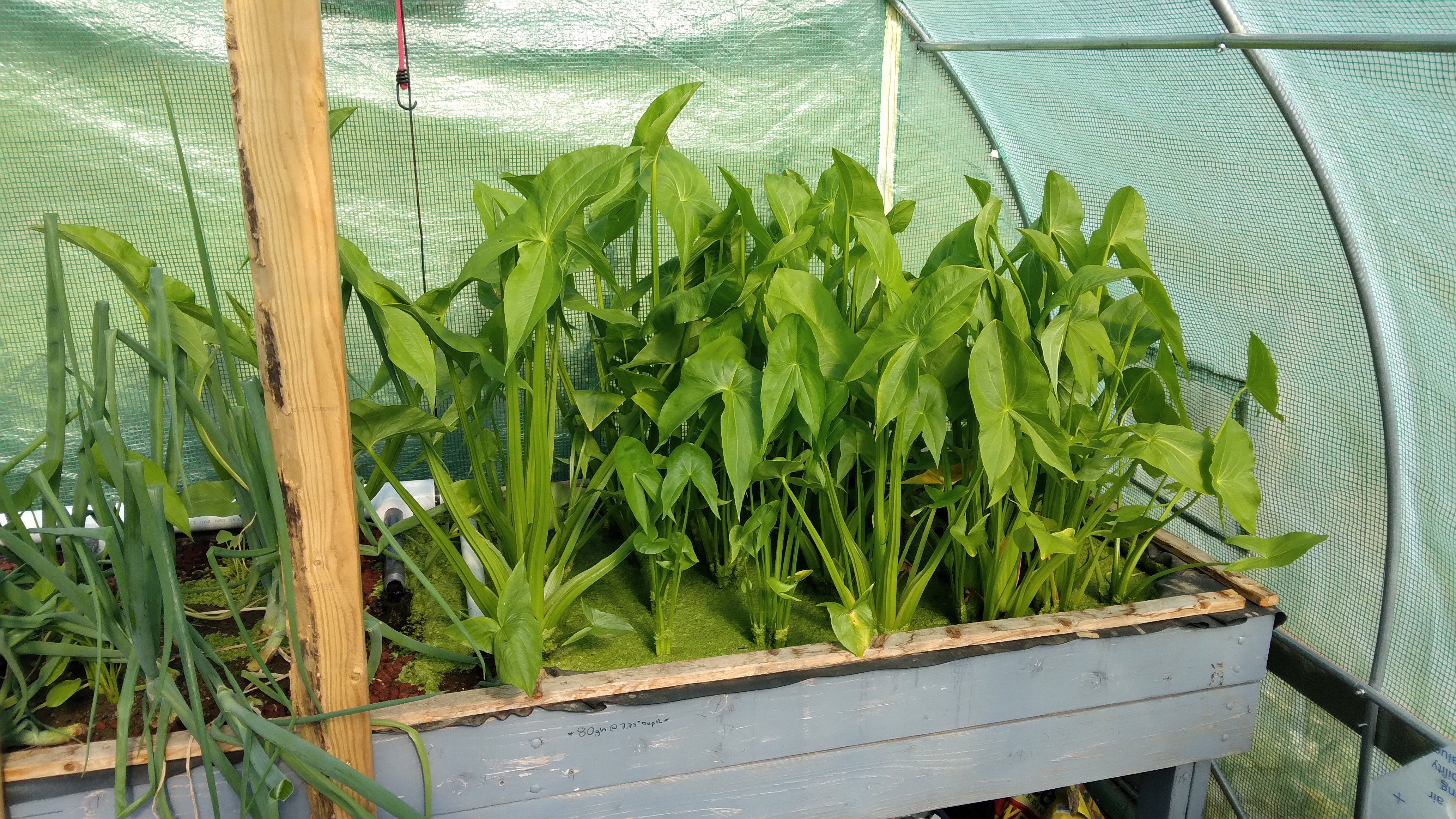
Some plants, like Wapato — also called arrowhead — require a bit of planning ahead. Large patches are easy to spot along freshwater shorelines in summer. Come winter, though, the plants die back so completely that there may not even be leftover detritus to mark their location. If you know exactly where a patch is, winter is an excellent time to work up their bulb‑like tubers. Once loosened, most tubers float to the surface on their own, saving you from any real digging. A single plant can produce many tubers, which makes this an ideal candidate for home cultivation.
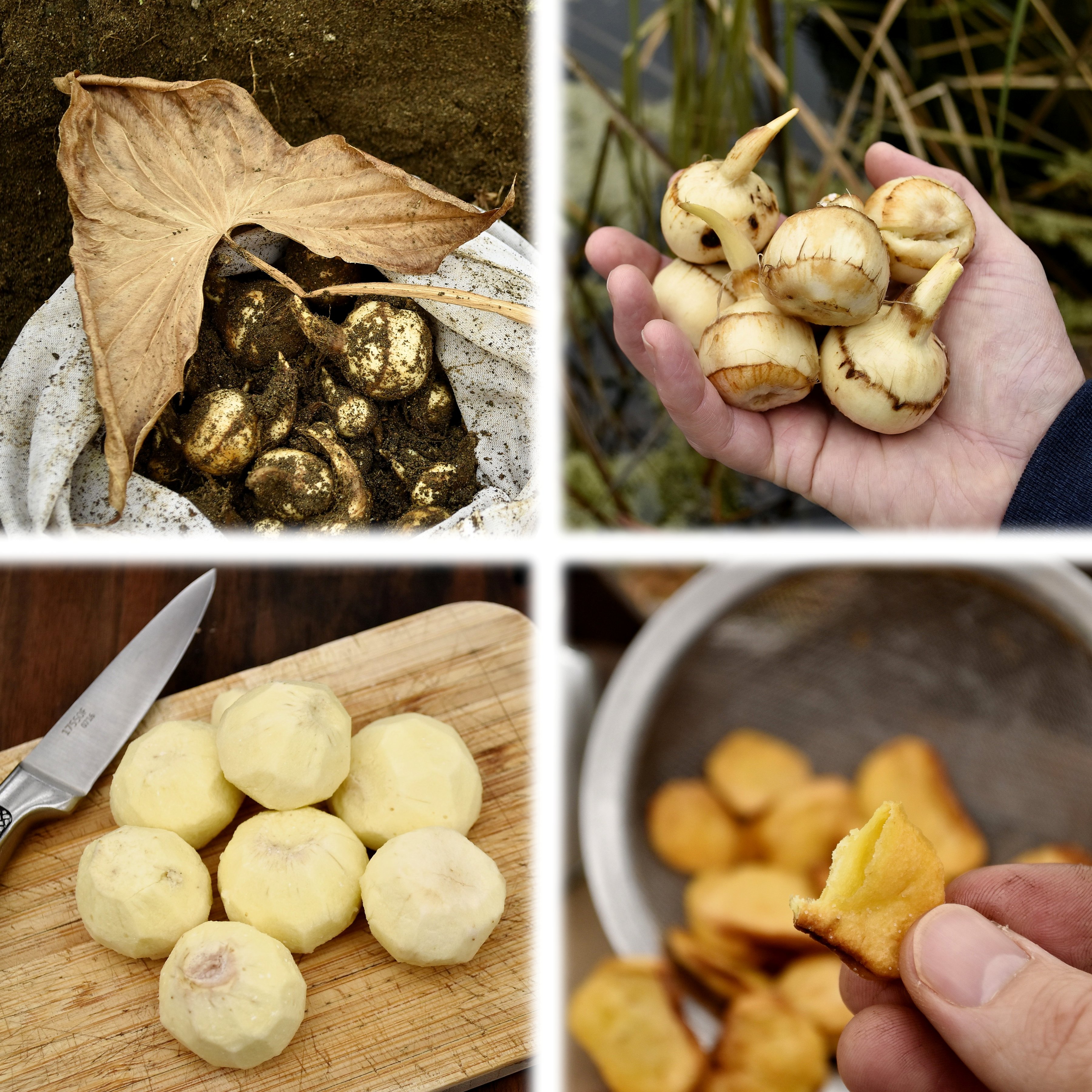
One traditional method used by Indigenous peoples of the Pacific Northwest involves a systematic “stomping” technique: working their feet into the muck around the plants until the tubers pop free and rise to the surface. If that feels a little too adventurous, you can use a walking stick from a canoe to probe the mud and scoop the tubers up with a net. They’re often called “duck potatoes” for their potato‑like flavor. The skin is generally bitter and best removed. Cook the tubers just as you would potatoes — boiled, baked or even deep-fried! Wapato is a reliable winter source of calories, carbohydrates, and protein.
🧅
#9 – Licorice Fern – Polypodium glycyrrhiza
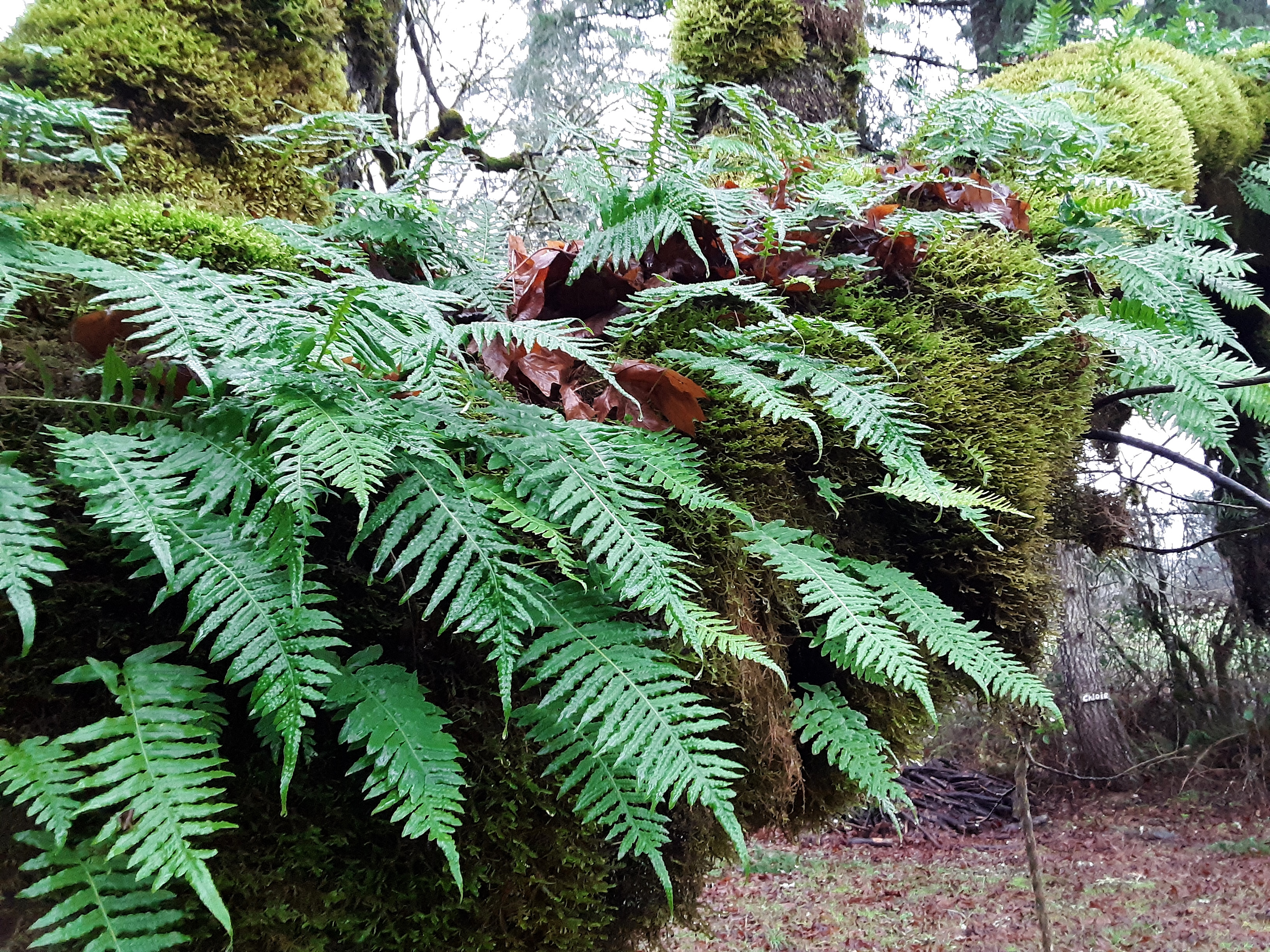
This small, epiphytic fern is extremely common in the rainforests of the Pacific Northwest. You’ll find it growing on trees, rocks, roofs — just about anything that offers a bit of foothold. If moss can grow there, chances are the licorice fern can too. Its rhizome is surprisingly potent, and as the name suggests, it tastes distinctly of licorice.
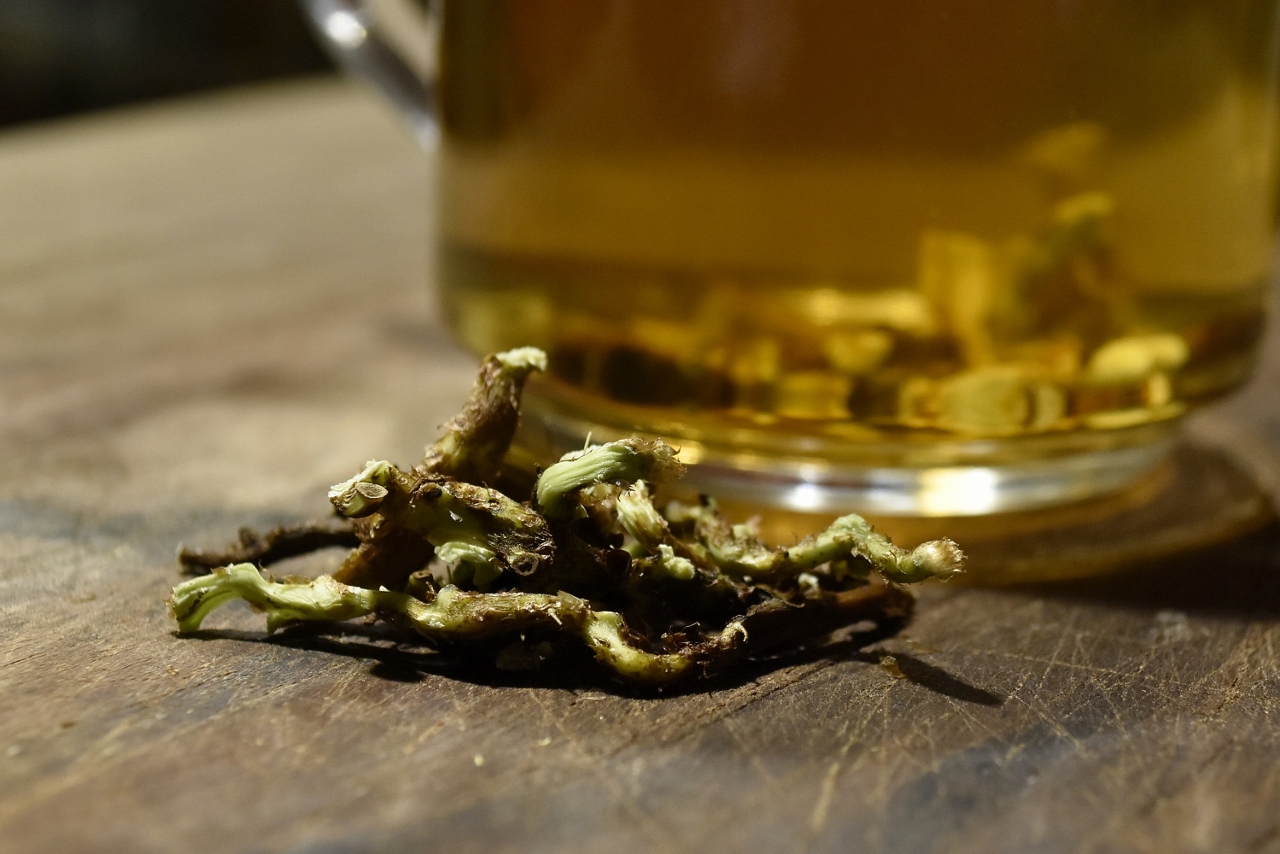
Indigenous peoples of the Pacific Northwest used the rhizome both medicinally and as a natural sweetener, especially for soothing sore throats. While the rhizome can be chewed fresh, I find the flavor mellows when it’s dried and brewed into tea. Because this fern spreads through its network of creeping rhizomes, it’s important to harvest responsibly. Collect only the newer growth from alternating side branches, skipping as you go. This helps prevent irregular or stunted regrowth and keeps the patch healthy for future foragers.
The leathery polypody is another epiphytic fern. However, this grows exclusively along the coast, has leathery leaves, and lacks any food value.
🫚
#10 Wild Carrot – Daucus carota

Last, but definitely not least, is the wild carrot — better known as Queen Anne’s lace. I consider this plant a forager’s gem for a few reasons: it’s incredibly widespread, it can be gathered year‑round, and it’s both delicious and nutritionally dense. The root offers a solid dose of carbohydrates, fiber, vitamins A, K, and C, along with minerals like potassium and iron.

As the name suggests, this is truly a feral carrot. What the taproot lacks in size, it more than makes up for in flavor. If people say store‑bought vegetables can’t compare to homegrown, I’d argue the same holds true for this self‑sown carrot. Wash and cook it just as you would its cultivated cousin. Because it’s a biennial, the first‑year roots are the most tender and flavorful. Once the plant sends up a flower stalk, the root becomes too fibrous to enjoy.
A common poisonous lookalike is Poison Hemlock. For more information on Wild Carrot, including a side-by-side comparison to poison hemlock, please visit my Wild Carrot article.
🥕
If you’d like to read more posts like this, consider signing up to follow our blog. You can also show your support by sharing this article with friends or pinning it to your favorite board.
Thanks for reading — and happy foraging!

All photographs of Henry Holly are the original work of the creator and are fully protected under U.S. and international copyright law. Commercial use, reproduction, distribution, or modification of these images is strictly prohibited without prior written permission.
Non‑profit organizations — including universities, state and national parks, educators, and conservation programs — are encouraged to reach out to request permission for approved educational use.
Discover more from The Northwest Forager™
Subscribe to get the latest posts sent to your email.
 The Northwest Forager™
Thanks so much for this. What a great reminder of the bounty that grows all around us.
Cheers,
Rebecca
________________________________
LikeLiked by 1 person
Thank you for checking it out Rebecca!
LikeLike